
Categories
Real Estate Market Analysis, Utah Housing TrendsPublished June 3, 2026
5 Surprising Forces That Will Shape Utah’s Real Estate for the Next Decade

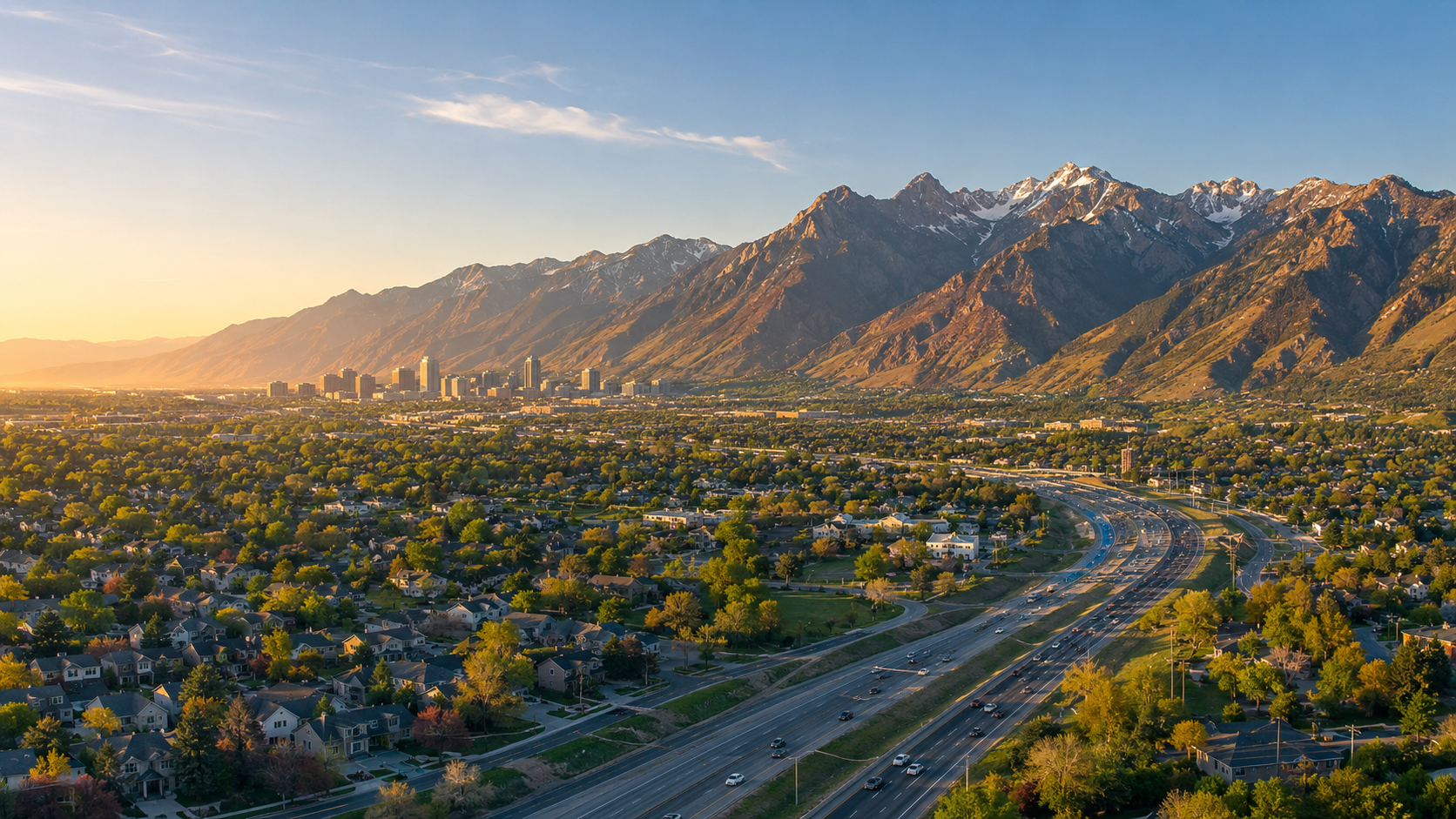
Utah real estate is not being shaped by one headline, one interest rate, or one boomtown story. It is being shaped on I-15 during the morning commute, in fast-growing Utah County cities, in water meetings that most people never attend, and in tech corridors where land and power matter almost as much as office space.
The numbers already show the tension. Utah’s median home price rose to about $506,500 in 2024, even after the market cooled from the sharp run-up of 2020 to 2022. At the same time, Utah kept adding people, jobs, and new construction pressure.
That is why the next decade of Utah real estate will not be easy to explain with the usual “prices up” or “prices down” language. The real story is more local, more layered, and more surprising.
This article breaks down the five forces most likely to shape Utah real estate over the next decade, and what they really mean for anyone watching this market closely.
The 5 Forces Reshaping Utah Real Estate
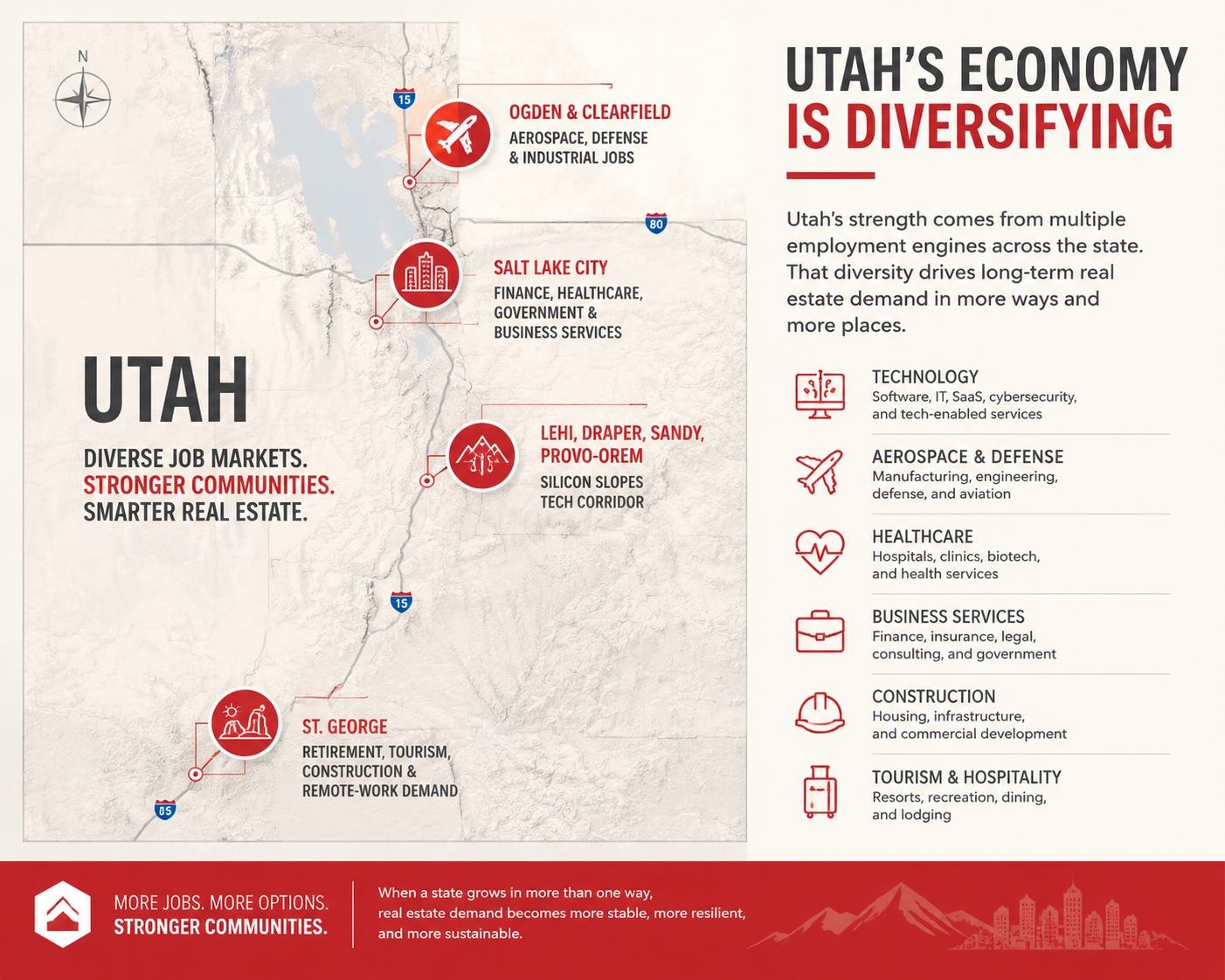
Force 1: Utah’s Economy Is Diversifying, Not Just Growing
Utah has been called a growth state for years. That part is true, but it is also too simple.
The more important shift is that Utah is becoming less dependent on any single type of growth. The state now draws strength from technology, construction, healthcare, finance, logistics, aerospace, defense, outdoor recreation, tourism, and education. That mix matters because real estate demand becomes stronger when it is supported by many kinds of jobs, not just one hot industry.
The Wasatch Front is still the main engine. Salt Lake City remains the center for finance, healthcare, government, and business services. Lehi, Draper, Sandy, and Provo-Orem continue to carry much of the Silicon Slopes story. Ogden and Clearfield have defense, aerospace, and industrial anchors. St. George brings retirement, tourism, construction, and remote-work demand into the picture.
By the Numbers:
• Utah’s population increased by about 43,000 people in 2024, a 1.4% gain.
• Utah added about 27,000 nonagricultural jobs in 2024, a 1.5% gain.
• Since 2010, Utah’s population grew 26.8%, one of the fastest rates in the nation.
• Utah’s employment growth since 2010 was reported at 47.5%, the highest among states in that comparison.
What this really means is that Utah real estate is not being held up by hype alone. A home in Utah County is not only reacting to tech jobs. A property in Davis County is not only reacting to Salt Lake City commuters. A home near Ogden is not only reacting to affordability spillover.
Demand is spreading through several economic lanes at once.
That does not mean every property rises in value at the same pace. It means the market has more support underneath it than a generic “boom or bust” headline suggests. When one industry cools, another may still be hiring. When one corridor slows, another may pick up activity.
Force 2: AI and Data Infrastructure Are Changing Where Demand Starts
The old Utah tech story was simple: software offices, startup campuses, and workers moving near Silicon Slopes.
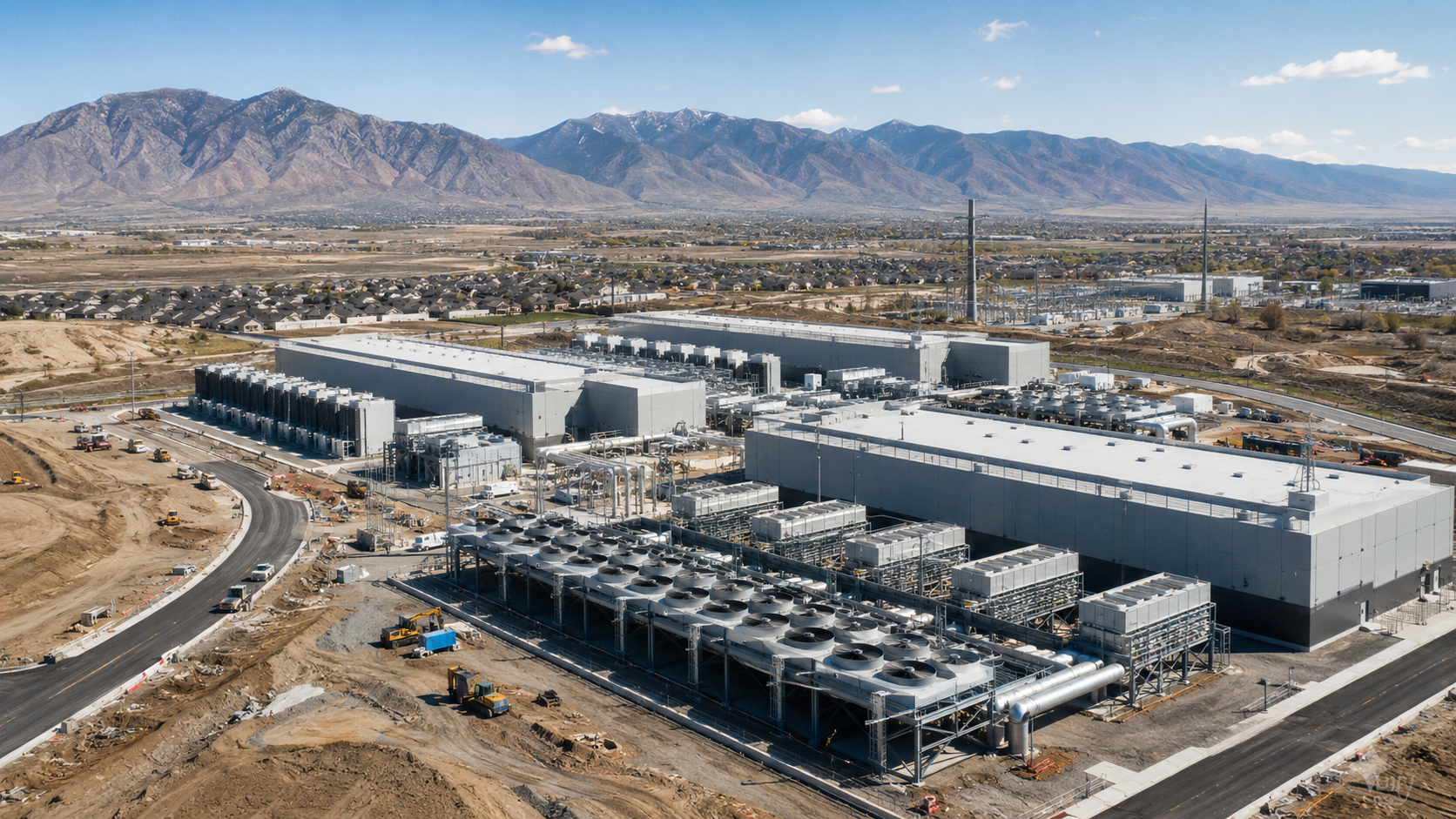
The new story is more physical. AI, cloud computing, and data-heavy industries need:
- Land
- Power
- Cooling
- Fiber
- Supporting infrastructure
Data centers don’t create downtown-style foot traffic or employ thousands in one building, yet they reshape local markets through construction, utility upgrades, road improvements, service jobs, and confidence for other employers.
Eagle Mountain shows this clearly. Once an affordable west-side option for commuters, it’s now part of conversations about tech infrastructure, land use, transportation, and long-term growth. Other areas experiencing similar shifts include:
- Saratoga Springs
- Lehi
- Bluffdale
- Herriman
- Western Utah County
These areas grow not just because homes are being built—they grow because infrastructure is being layered into locations that used to feel far away.
Housing demand often shows up before people notice the reason. First comes land assembly, then utility upgrades, then roads, commercial pads, schools, and services. By the time the story is obvious, prices may already reflect years of quiet positioning.
What This Really Means:
A city can feel “far out” until infrastructure changes the math. Long commutes can become acceptable, and neighborhoods that once felt remote can turn into new employment hubs.
AI infrastructure is one of the most overlooked forces in Utah real estate. It’s not just about tech workers—it’s about the physical map of the economy shifting.
Data centers also consume significant power and water. In Utah, those resources are limited, so communities must balance growth with resource constraints, especially in desert and valley areas.
The real question isn’t “Will tech grow?” It’s: Which places are getting the infrastructure that makes future growth easier?
In Utah, that answer can matter as much as school ratings or today’s median home price.
Force 3: Water Is Becoming a Real Estate Filter
Water may be the least glamorous force on this list, but it may be the most important.
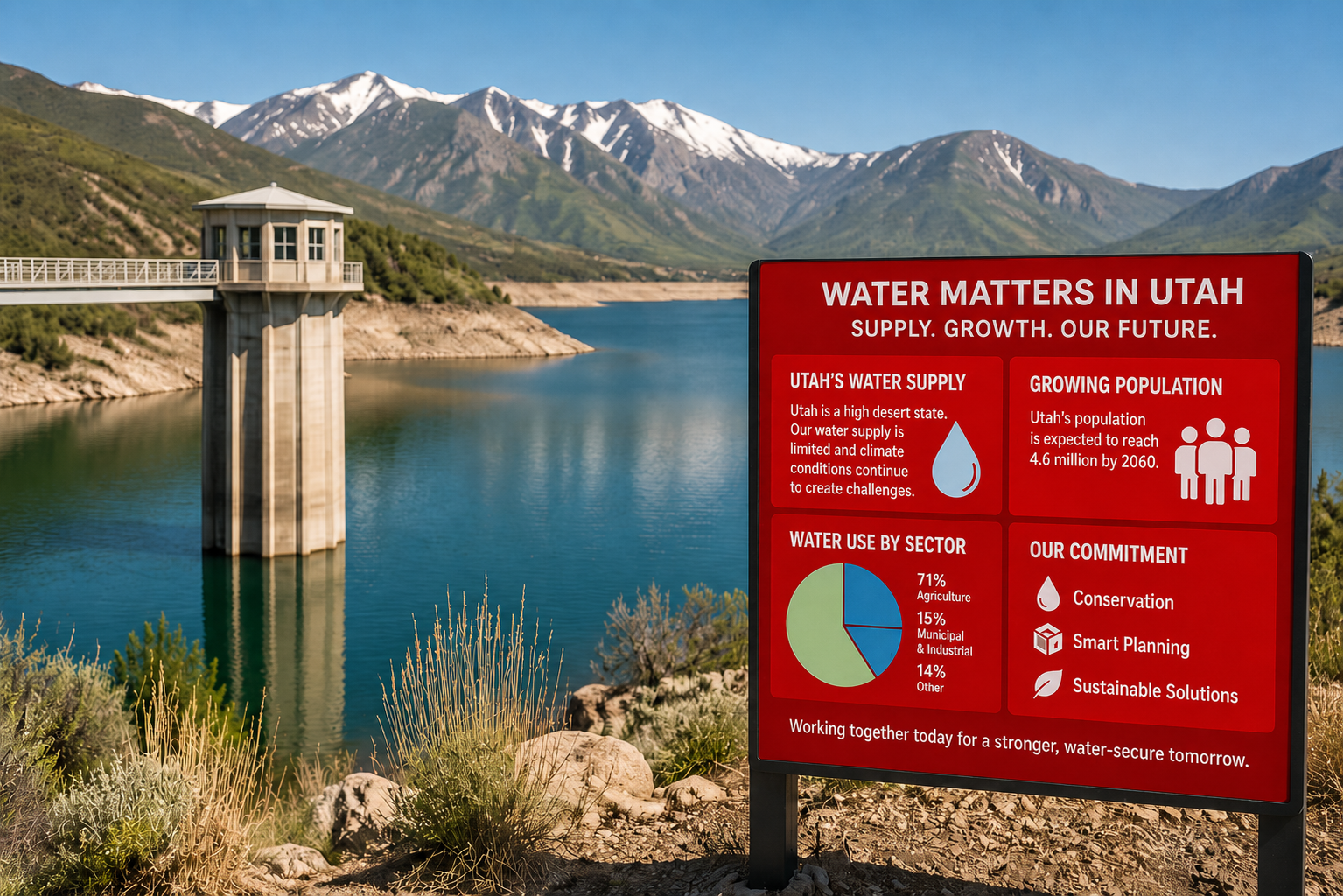
Utah is dry. That is not new. What is new is how directly water is starting to affect growth, zoning, development approvals, landscaping rules, and long-term property value.
For years, many people treated water as a background issue. It mattered for farms, reservoirs, snowpack reports, and summer restrictions. Now it is moving closer to the center of real estate decisions.
A new subdivision is not just judged by demand. It is judged by whether the water plan works. A city’s growth plan is not just about roads and schools. It is also about supply, conservation, secondary water systems, and long-term rights.
This is especially important in places where growth meets desert reality: Washington County, Tooele County, Utah County’s west side, parts of Weber and Davis counties, and smaller communities trying to manage expansion without overpromising resources.
By the Numbers:
• Utah’s housing prices have remained high partly because population and employment growth expanded demand faster than housing supply.
• Utah’s total residential building permits were about 23,000 units in 2024, up around 5% from the prior year, but still below the peak building pace of the early 2020s.
• Utah’s long-term population growth has outpaced the national rate, adding pressure to land, roads, schools, and water systems.
Water is not only about whether a home has service today. It is about whether the area can keep approving growth tomorrow.
That can affect everything around a property. If supply becomes more limited, already-approved areas may become more valuable. If a city pauses or slows new development, existing homes may face less nearby competition. If water costs rise, homes with inefficient landscaping or high outdoor use may become more expensive to own.
Force 4: Infrastructure Will Redraw Utah’s Real Estate Map
Most people judge a location by how it feels right now. The better question is how that location will function five, seven, or ten years from now.
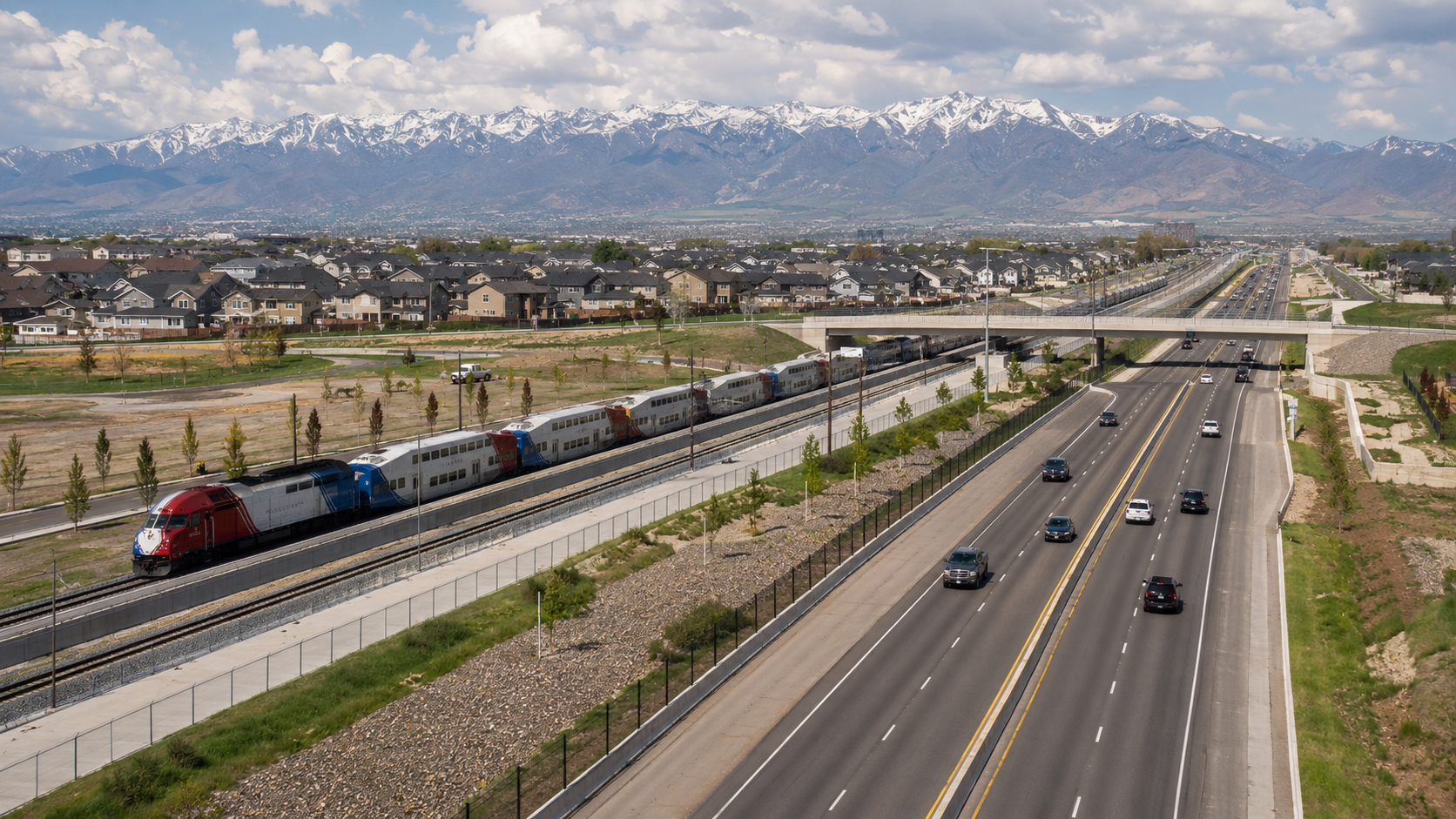
Infrastructure is what changes that answer. In Utah, that matters because so much of the population moves through narrow corridors shaped by mountains, lakes, and desert land.
Several projects and improvements are already shaping how people think about access and location:
- Mountain View Corridor changing the west side of Salt Lake and Utah counties
- FrontRunner improvements affecting commutes between Ogden, Salt Lake City, Lehi, Provo, and beyond
- Salt Lake City airport expansion strengthening Utah’s role as a regional business and travel hub
- 2034 Winter Olympics preparation bringing more attention to transit, lodging, downtown Salt Lake, resort access, airport flow, and public-space improvements
The Olympics will not magically transform every Utah neighborhood. Utah already has many of the major venues from 2002, which is part of why the state became such a strong host choice again.
What This Really Means:
Infrastructure does not always create instant price jumps. It often changes the ceiling of what an area can become.
That is why Utah real estate over the next decade will partly come down to “access math.” How long does it take to get to work, school, the airport, the canyon, the hospital, or the nearest major retail center? When that answer improves, demand can change.
Red Sign Team often looks at these shifts before they show up in listing descriptions. A home is never just a home. It is connected to a road network, a school boundary, a city budget, a transit plan, and a future commute pattern.
The next decade will make that more obvious.
Force 5: Utah’s Culture Is Changing the Definition of a “Good Location”
Utah’s real estate market is not only changing because of jobs and construction. It is changing because people are using homes differently.
The old pattern was more predictable. Live near work. Buy as much house as possible. Commute if needed. Look for a yard, a garage, and a school boundary.
Those things still matter. But the definition of a “good location” is getting wider.
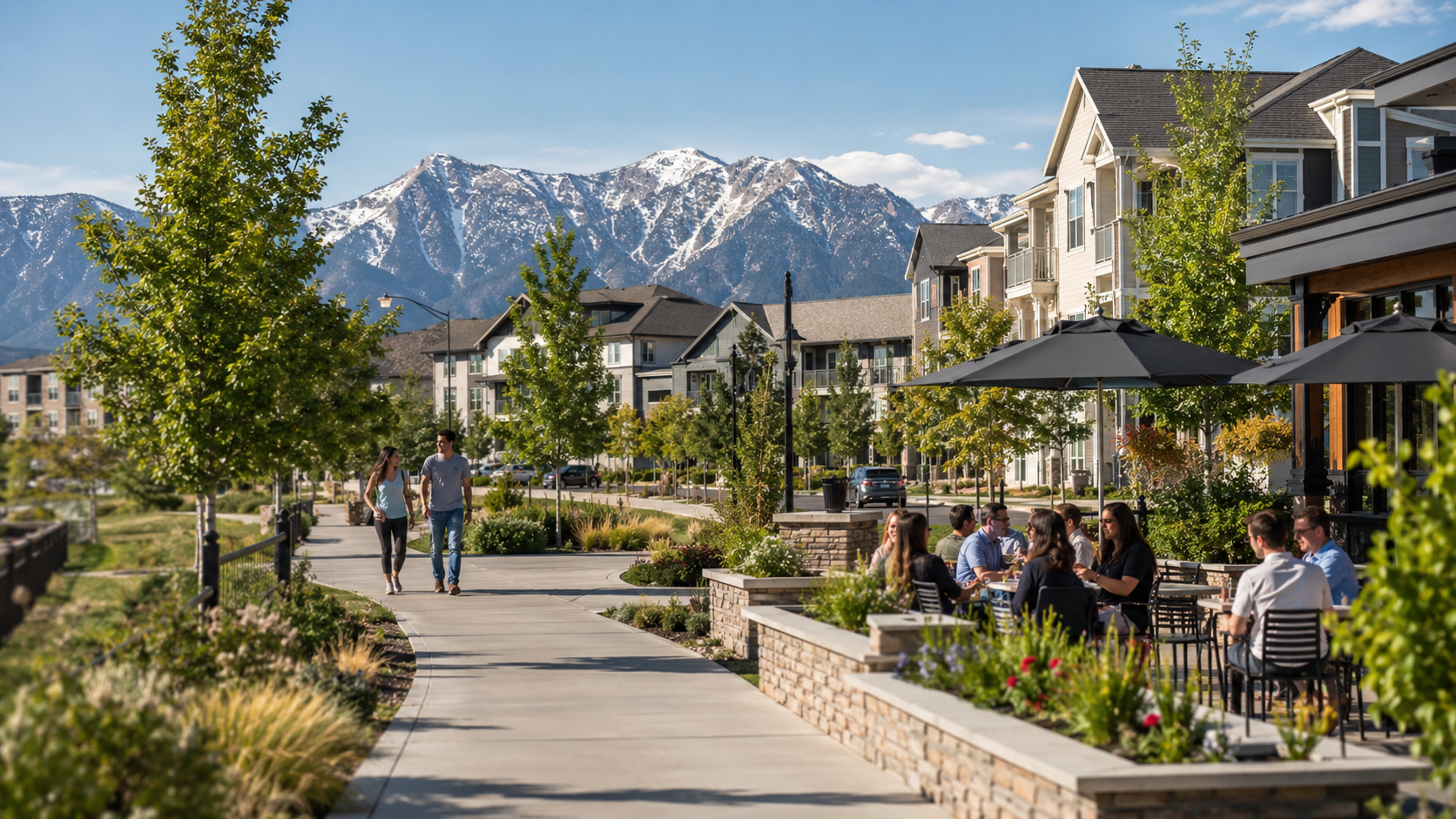
People in Utah right now are weighing lifestyle with more precision. Access to trails matters. Canyon traffic matters. Airport distance matters. Walkable restaurants matter. Basement apartment potential matters. Multigenerational layouts matter. A short drive to a university, hospital, temple, ski resort, or tech corridor can change how a home is viewed.
Remote and hybrid work changed the map, too. Not everyone has to be in Salt Lake City five days a week. That gave more attention to places like Heber, St. George, Park City’s surrounding communities, Cache Valley, and parts of southern Utah. It also made “home” carry more weight as an office, gym, schoolwork zone, and gathering place.
At the same time, affordability has forced more creativity. Townhomes, condos, accessory dwelling units, smaller lots, longer commutes, and multigenerational living are no longer side conversations. They are part of the main Utah real estate story.
Key Insight:
Utah’s next real estate winners may not be the places with the loudest buzz. They may be the places that solve daily life better.
That could mean a shorter commute. It could mean better access to outdoor space. It could mean a home that can house more than one generation. It could mean a location that still feels connected when gas prices, traffic, or winter storms complicate the week.
Culture is not soft data. In Utah, culture affects demand.
FAQs About Utah Real Estate Over the Next Decade
Q: Will Utah real estate keep going up over the next decade?
A: Utah real estate has strong long-term support from population growth, job growth, and limited land in key corridors. That does not mean prices will rise every year or in every city. The better expectation is uneven growth, with stronger performance in areas supported by jobs, infrastructure, water security, and daily livability.
Q: What areas of Utah are most likely to grow in the next decade?
A: Growth is likely to continue along the Wasatch Front, especially in Salt Lake County, Utah County, Davis County, Weber County, and fast-growing west-side communities. Southern Utah, including St. George and surrounding areas, may also keep attracting attention because of lifestyle, retirement, tourism, and remote-work demand. The strongest locations will depend on infrastructure, affordability, and local planning.
Q: What is the biggest risk for Utah real estate?
A: Affordability is the most visible risk, but water may be the most underestimated long-term risk. If housing costs remain high while water, infrastructure, and zoning constraints limit new supply, Utah real estate could become more competitive in some areas and more uneven in others. That is why local research matters before making a decision.
What These Forces Mean for Utah Real Estate Decisions
Utah real estate is entering a decade where the best decisions will come from looking past the listing photo.
Price still matters. Mortgage rates still matter. Inventory still matters. But the deeper questions are becoming more important:
• Is this area supported by diverse jobs?
• Is infrastructure improving or falling behind?
• Does water create future limits?
• Is growth moving toward this location or around it?
• Does the home fit how people in Utah actually live now?
This is why broad market averages can be misleading. A statewide median price cannot tell the full story of Salt Lake County compared with Utah County. It cannot explain why Davis County may behave differently from Washington County. It cannot show the difference between an older east-side neighborhood, a west-side master-planned community, and a newer city still building its identity.
Utah is not one market. It is a set of connected markets.
The next decade will likely reward patience, local knowledge, and careful comparison. It will punish lazy assumptions. “Utah is growing” is true, but it is not enough. Growth has direction. Growth has limits. Growth has winners, trade-offs, and timing.
Red Sign Team’s role in this kind of market is not just to open doors or post listings. It is to help people read the forces behind the property: the corridor, the city plan, the commute, the water reality, the resale path, and the local demand that may not be obvious at first glance.
The strongest Utah real estate decisions over the next decade will come from people who understand the bigger map before they make a move.

Red Sign Team
Real Estate Team | Red Sign Team | KW Westfield
or another way