Categories
Real Estate Insights, Utah Market TrendsPublished February 17, 2026
The Most Educated States in 2026: Why Utah’s Ranking Matters for Homes and Neighborhoods
.png)
When WalletHub released its Most Educated States rankings in early 2026, Utah narrowly missed the top 10 — finishing No. 11 nationwide. That might seem like trivia at first glance, but scratch the surface and you’ll find something far bigger: a deeper connection between education, economic growth, and how communities evolve through housing and real estate demand.
Utah’s place in that educational landscape reveals more than just degrees on a resume. It reflects how the state’s residents, employers, neighborhoods, and housing markets operate together. In 2026, that connection touches everything from price trends in Salt Lake and Weber counties to demographic changes in markets like Provo–Orem, and even to how long homes sit on the market.
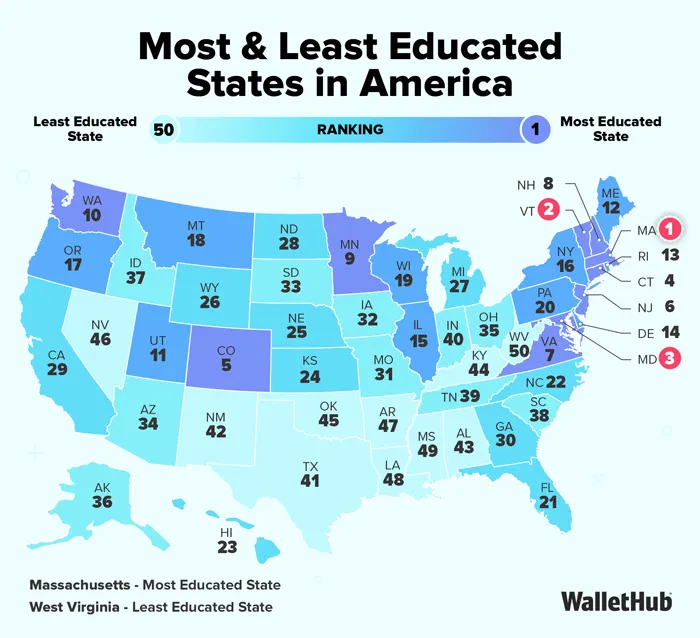
Image courtesy of WalletHub
Why Utah’s Education Profile Matters More Than You Think
Education does not directly determine home prices, but it shapes the economic and demographic forces driving housing demand.
In the 2026 WalletHub analysis, Utah ranked No. 11 nationally, narrowly missing the top 10. Leading the list were states like Massachusetts, Vermont, Maryland, Connecticut, and Colorado, recognized for high educational attainment, strong public school systems, and equitable opportunities across communities. While Utah trails these leaders slightly in terms of quality metrics, its residents rank among the nation’s most educated in terms of degrees earned and postsecondary experience.
Higher educational attainment generally translates to higher earning potential, lower poverty rates, and greater financial stability — all of which support homeownership, neighborhood investment, and long-term property value growth. In this context, Utah’s position highlights both its progress and its potential to continue shaping strong, sustainable housing markets.
The WalletHub study evaluated states across 18 weighted metrics in two major categories:
-
Educational Attainment
-
Quality of Education and Attainment Gaps
Utah performed strongly in educational attainment but ranked lower in education quality (No. 26).
Key highlights:
-
Utah has the second-highest percentage of associate’s degree holders or college-experienced adults in the country.
-
Over 61% of Utahns have some form of postsecondary education.
-
Approximately 25% hold a bachelor’s degree.
-
Around 13% hold graduate or professional degrees.
Local research from the Kem C. Gardner Policy Institute at the University of Utah supports the correlation between higher education and higher earnings.
And higher earnings? That directly fuels housing demand.
2026 Market Pulse: Stability Over Turbulence
If you compare Utah’s 2026 housing market to previous years, a clear theme emerges: stabilization.
Leading market observers report that median home prices are relatively flat, with modest increases rather than the explosive growth seen in the pandemic era. According to recent housing data, the statewide median sale price for single-family homes now hovers around $520,000–$550,000 — evidence of slower, sustainable movement rather than overheated bidding wars.
At the same time, inventory levels — which were once historically low — are finally expanding. In early February 2026, Utah active listings climbed above 10,000 homes, and average days on market lengthened, suggesting a housing ecosystem that is finding its footing rather than racing ahead without balance.
Put simply: buyers have more choices, sellers have more time to make thoughtful decisions, and the market is entering a new phase where education, jobs, and long-term community health matter more than quick price spikes.
Education and Quality of Life: Why People Choose Where They Live
Utah’s near-top 10 education ranking also intersects with residents’ quality of life expectations.
More than just diplomas, education levels correlate with broader community outcomes: civic participation, demand for public services, investment in parks and infrastructure, and even cultural engagement. As families and professionals evaluate where to settle, these factors weigh heavily alongside price tags and property values.
Consider transit-oriented developments like Station Park in Farmington. This mixed-use community — with retail, housing, and transit access — thrives because it aligns with the lifestyle priorities of a well-educated, mobile population seeking walkability, connectivity, and convenience.
Communities that cultivate education and invest in public spaces often retain residents longer and attract newcomers more consistently. For real estate markets, that translates to neighborhood desirability, stronger resale values, and durable demand over time.
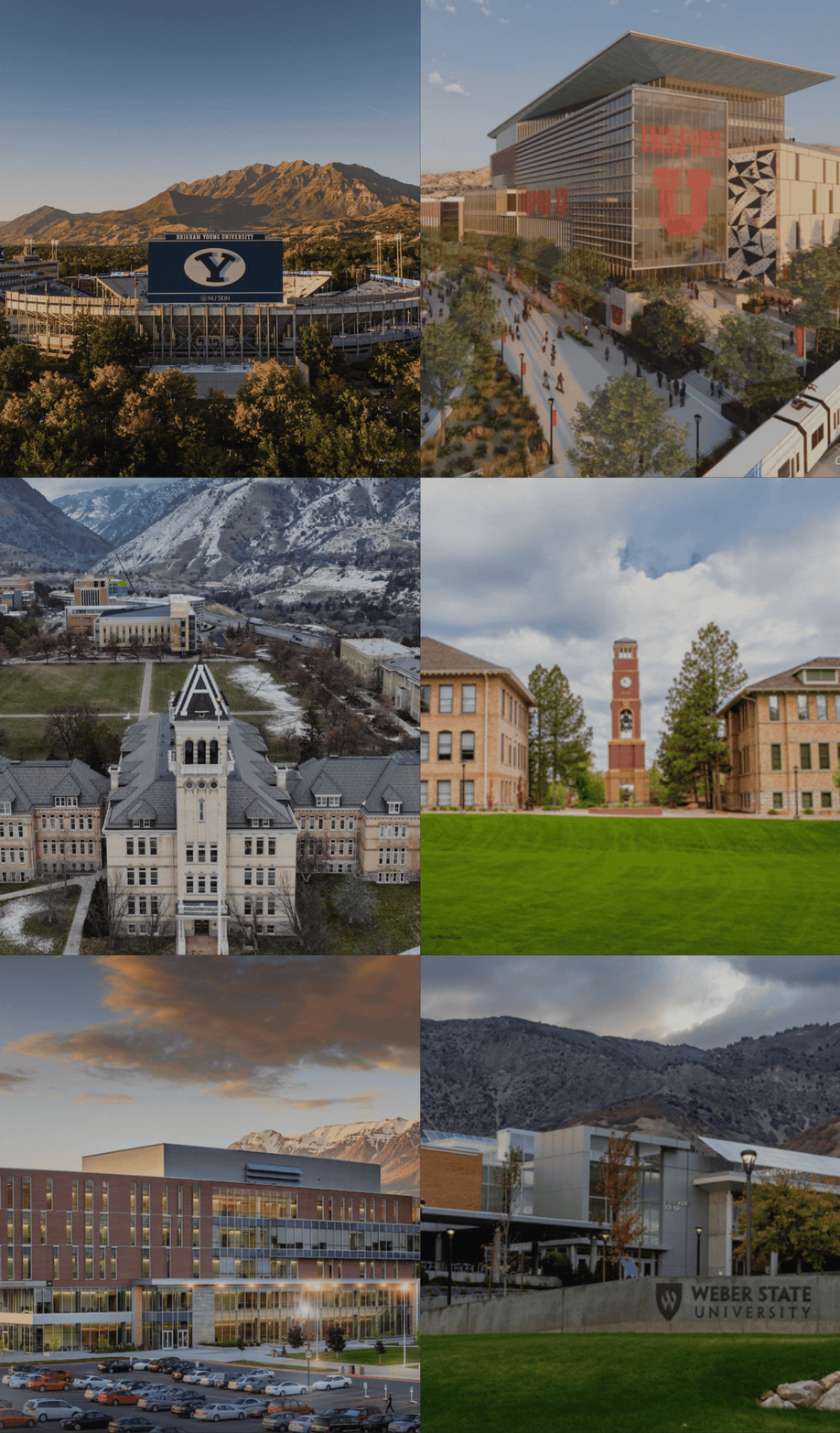
Campus Influence and Urban Growth: Utah’s Most Impactful Universities
Utah’s universities don’t just educate students — they help shape entire regional economies and residential markets in ways that ripple through communities year after year. These campuses influence job markets, neighborhood development, lifestyle preferences, and even where people choose to raise families.
Here’s a look at the major institutions that play a key role in the state’s real estate narrative:
Brigham Young University (BYU)
As one of Utah’s most visible and influential institutions, BYU hosts more than 37,000 students and has deep cultural and economic roots in the Provo–Orem area. Its presence attracts businesses, supports housing demand near campus, and fosters entrepreneurial activity that sustains long‑term community growth.
University of Utah
The University of Utah is a major economic engine for the state, supporting tens of thousands of jobs and billions in economic output while enrolling more than 35,000 students across graduate, medical, and professional programs. Its influence extends to Salt Lake City’s job market, innovation ecosystem, and housing demand.
Utah State University (USU)
Utah State University contributes billions to the state’s economy through research, employment, and regional partnerships. Its programs in agriculture, engineering, and applied sciences attract talent and businesses, supporting the Cache Valley housing market and surrounding areas.
Utah Valley University (UVU)
The largest university in Utah by enrollment, UVU has nearly 48,000 students. Its growth has transformed the Orem–Provo corridor into a dynamic residential and commercial region, influencing housing patterns as young professionals and families increasingly choose this area for opportunity and lifestyle.
Weber State University
Weber State University plays a meaningful role in the Ogden economy, providing workforce training, cultural amenities, and increased neighborhood demand for housing. Its presence supports local businesses and contributes to ongoing revitalization.
Southern Utah University (SUU)
SUU anchors southwestern Utah, supporting regional economic activity and community engagement. Its contributions to jobs and GDP strengthen housing demand in Cedar City and nearby communities.
Other Notable Institutions
Other colleges — including Snow College in Ephraim, Westminster College in Salt Lake City, and various community colleges — enrich local communities and contribute to workforce pipelines in healthcare, technology, and trades.
Why This Matters for Real Estate
These campuses act as anchors for local economies. They generate jobs, attract businesses, and draw residents — all of which influence how nearby housing markets develop over time. Neighborhoods close to major universities tend to see:
-
Stable long-term demand
-
Higher participation from young adults and first-time buyers
-
Growth in rental and owner-occupied housing
-
Amenities catering to educated, career-oriented populations
In short, where education thrives, communities often follow — and real estate markets in those regions reflect that strength.
The Provo–Orem Example: Youth, Education, and Housing Demand
One of the most telling examples of this connection is seen in the Provo–Orem metropolitan area. Recent analysis highlights that this region has become one of the youngest homebuying metros in the country, with a median homebuyer age of just 27.
Why does this matter? Younger buyers often pursue education and early career opportunities, which directly influences housing trends. Areas near universities, research institutions, and growing job centers become magnets for first-time buyers and young professionals — and that sustained demand feeds residential markets over decades, not just quarters.
Even as prices have risen — with median home values increasing from around $277,000 in 2019 to over $467,000 by 2025 — young buyers continue to participate in the market through local financial programs, affordability initiatives, and long-term planning.
This pattern — of educated young professionals entering local housing markets — is shaping community development in ways that go beyond simple transaction volumes. It supports neighborhoods where families plant roots, economic ecosystems diversify, and civic engagement grows.
Looking Beyond 2026: Long-Term Trends Worth Watching
Utah’s No. 11 ranking is not just a snapshot — it’s a forecast of potential. As the state continues investing in education across K-12 systems, higher-education institutions, and workforce training, the long-term effects on housing will be real.
Urban cores, suburban corridors, and growth zones across the Wasatch Front are all influenced by the same forces — education breeds economic opportunity, which fuels stable housing demand.
Recent market insights suggest that 2026 isn’t a year of major corrections or dramatic shifts; it’s a year where fundamentals matter again. With inventory rising and pricing stabilizing, communities that are rooted in strong economic engines — like Salt Lake City, Utah County’s tech corridor, and youth-driven metros like Provo–Orem — are likely to outperform more volatile regions.
What This Means for How We Think About Real Estate in Utah
Utah’s housing market is not shaped solely by mortgage rates or national headlines. It is shaped by people — by where they learn, work, raise families, and build careers.
The story behind Utah’s education ranking reveals something deeper about the nature of the state’s real estate landscape:
-
A skilled workforce helps anchor communities through economic cycles.
-
Young, educated populations support neighborhood continuity and demand.
-
Quality of life — shaped by education, amenities, and economic opportunity — influences where people choose to live, work, and invest.
This is not a short-term cycle. This is structural: tied to labor markets, community development, and generational trends that will define Utah’s real estate environment well into the 2030s.
Utah’s Real Estate Future is Not Just About Growth — It’s About Resilience
The headlines about education rankings are worth more than a quick glance. They remind us that real estate markets are living systems — influenced by social patterns, economic opportunity, migration flows, and the choices people make about where to build their lives.
In Utah in 2026, the housing market is entering a more balanced, data-driven, and community-focused phase. Education is not the headline. But it is one of the most powerful forces shaping what happens next.
Whether it’s the young buyers in Provo, the innovation corridors around Lehi, or the dynamic neighborhoods of Salt Lake City, where education and opportunity grow — housing demand and community vitality follow.
Red Sign Team
Real Estate Team | Red Sign Team | KW Westfield
or another way