
Categories
Buyer Tips, Southern Utah Market UpdatesPublished October 30, 2026
Could Manufactured Housing Help Southern Utah's Housing Affordability?

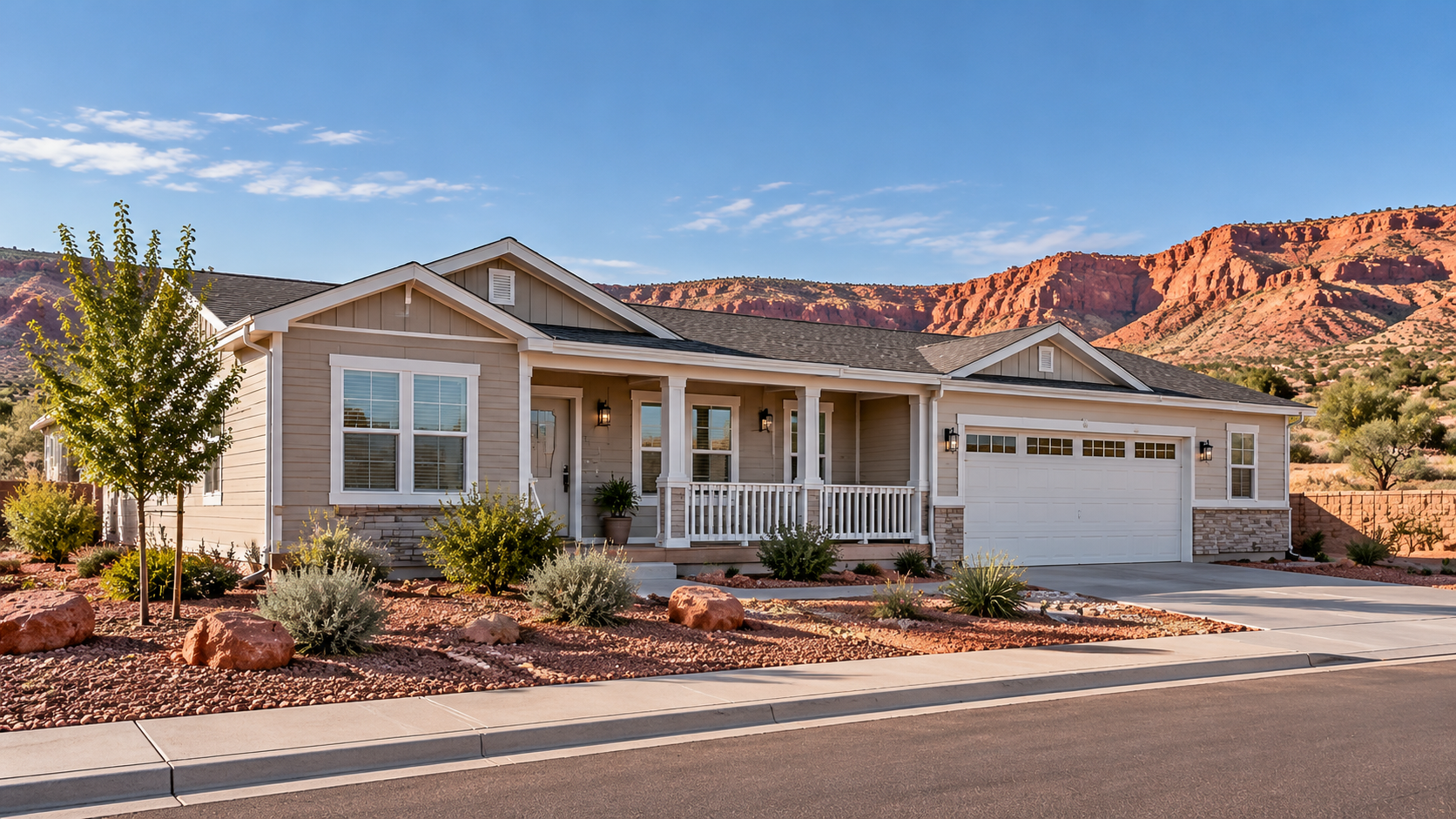
If you have shopped for a home in Washington County lately, you already know the math. The countywide median sale price was $499,163 in September, according to Washington County MLS data, and one question keeps coming up in my conversations with buyers: is there a more attainable path to owning a home here?
Manufactured housing is part of that conversation, and a new national report just put it back in the headlines. Below is my honest, local take on what the report found, what the rules in St. George, Washington City, Hurricane and Ivins actually say, and where the real opportunities and tradeoffs sit for buyers and sellers.
WHAT THE NEW REALTOR.COM REPORT FOUND
On October 26, Realtor.com released research on where manufactured homes could help rebuild the supply of starter homes. Its headline number: only about 17% of zoned land in the areas studied explicitly allows mobile or manufactured home parks, based on Land Use Labs data.
Two details matter before anyone runs with that figure:
- The data covers roughly two thirds of U.S. jurisdictions, not every parcel in the country.
- It measures land explicitly zoned for manufactured home parks. It does not mean manufactured homes are banned on every other lot.
The report is tied to a federal change. The 21st Century ROAD to Housing Act, enacted this summer, removed the requirement that every manufactured home sit on a permanent steel towing chassis. That could lower costs, open up more design options and help these homes look more like their site built neighbors. HUD's Manufactured Housing Consensus Committee was scheduled to meet October 27 and 28 to discuss chassis removal, but a committee discussion is not a final construction standard.
Realtor.com ranked the 100 largest metros on three factors: the share of starter homes, the median price of land per acre and the premium buyers pay for new site built construction. Hartford, Denver, Allentown, Albuquerque and Colorado Springs topped the list. No Utah metro, Las Vegas or Phoenix made the top 10.
The report's bottom line is one I agree with: federal law can change how these homes are built and financed, but local governments still decide where they can go.
MOBILE, MANUFACTURED OR MODULAR? THE WORDS MATTER
People use these terms interchangeably, but lenders, appraisers and city codes do not.
| Term | What it means | How it is usually treated |
|---|---|---|
| Mobile home | Factory built before June 15, 1976, before federal standards existed | Often hard to finance; many lenders will not lend on it |
| Manufactured home | Factory built on or after June 15, 1976, to the federal HUD Code, with a red HUD label on each section | Personal property unless it is permanently affixed to land and converted with a recorded affidavit |
| Modular home | Factory built to the same state and local codes as a site built home | Generally treated like a site built home |
The picture most people have in their heads is a traditional mobile home park: older single section homes on rented lots. A modern multisection manufactured home on a permanent foundation, on land the buyer owns, is a very different product. It can carry a pitched roof, a garage and stucco or lap siding, and it can be titled as real estate. The new chassis rule is designed to narrow that visual gap even further.
WHAT UTAH LAW ALREADY SAYS
Here is something the national headline misses: Utah has protected manufactured homes in single family zones for decades. Under state law, a city or county may not exclude a manufactured home from any zone where a single family home is allowed, as long as it meets the same zoning, building code, subdivision rules and restrictive covenants. Cities also may not treat a development differently, or reject a plan, simply because it will include manufactured homes. That protection was first enacted in 1996 and expanded in 2001, and it now sits at Utah Code 10-21-302 after a 2025 renumbering.
The catch is in the phrase "the same standards." A city can still require a minimum width, a roof pitch, a garage or a permanent foundation, as long as it applies those rules to every home in that zone. And private CC&Rs in an HOA community can restrict home types even where city zoning would allow them.
To be treated as real property in Utah, a manufactured home generally has to be permanently affixed to land the owner holds (or leases under qualifying long term terms) and documented with a recorded affidavit of affixture. That step is what opens the door to traditional mortgage financing, so it matters for buyers and sellers alike.
HOW THE LOCAL RULES LOOK ACROSS WASHINGTON COUNTY
I reviewed the published codes for our main cities in October 2026. Codes change, and every lot has its own zoning, overlays and CC&Rs, so treat this as a starting point and confirm with the city's planning department before you buy or build.
Washington City. Washington has a dedicated Mobile Home and Recreational Vehicle (MH) zone. Outside that zone, Chapter 21 of the city code sets design standards that apply to every new single family or two family home, manufactured or not. For a manufactured home, the highlights include:
- HUD certification and a copy of the state affidavit filed with the city before a certificate of occupancy
- A permanent, code approved foundation with footings at least 12 inches below grade and all towing gear removed
- A roof pitch of at least 2.5 in 12, with eaves of at least 6 inches
- A minimum width of 20 feet, with multisection homes built in sections at least 10 feet wide
- A garage or carport where the zone requires one, and a front entry facing the street
- At least 900 square feet on the main floor for lots of 7,000 square feet or less, and 1,000 square feet on larger lots
The chief building official can approve deviations on foundation, roof and siding details when the design offers compensating features.
St. George. St. George has dedicated Mobile Home zones (MH-6 through MH-40) where manufactured homes are a permitted use. The design criteria there, and in zones like Gravel and Grazing, call for compliance with federal manufactured housing standards, perimeter footings at least 12 inches below grade, removal of all running gear, approved exterior materials and a minimum dwelling width of 20 feet. Requirements vary by zone, so check the specific district for your lot.
Hurricane. Under Title 10, Chapter 43, a manufactured home may be placed in any single family zone if it is attached to a permanent foundation and meets that zone's requirements. Parks and manufactured home subdivisions are set up in the MH/RV zone. A used home moved into the city also needs building official approval, its original HUD sticker, an inspection and a separate setup permit.
Ivins. Ivins is the one city we have not confirmed in detail, so treat this as a starting point only. The definitions in the Ivins zoning code describe a manufactured dwelling unit as a HUD Code home at least 24 feet wide at its narrowest point, with a roof pitch of at least 2 in 12, that is identified as real property on the county assessment rolls. How those standards apply to a particular lot, and whether a given neighborhood's CC&Rs allow these homes, is a question for Ivins planning staff before you buy.
Unincorporated Washington County. County rules require a manufactured home to carry the manufacturer's data plate and a HUD label certifying it was built to federal standards.
My takeaway: a HUD Code home on land you own is not the legal impossibility the 17% figure might suggest in our area. The practical barriers here are design standards, HOA restrictions and, most of all, the price of land. I am not aware of any documented local zoning change tied to the new federal law as of this writing.
Quick Lot Check
Will a manufactured home work on your lot? Five checks, in order.
1
Does your zone allow a single family home?
Check the city zoning map for your parcel. If it does, Utah law says a manufactured home cannot be excluded just for being manufactured.
2
Do the CC&Rs allow it?
HOA rules can restrict home types even where zoning allows them. Read the recorded CC&Rs, not just the HOA website.
3
Does the home meet the city's design standards?
Think width, roof pitch, foundation, garage and minimum square footage. Washington City spells these out in Chapter 21.
4
Will you own the land under it?
Owning the lot is the most common path to converting the home to real property with a recorded affidavit of affixture.
5
Which financing route fits?
Real property can open FHA Title II, MH Advantage or CHOICEHome. A home only purchase usually means a chattel or FHA Title I loan.
Five yeses? Your next calls are the city's building department for permits and a lender with manufactured home experience.
THE LAND QUESTION IS THE REAL QUESTION
Realtor.com points out that the cost advantage of manufactured housing matters most for buyers who own, or are buying, the land the home will sit on. In Southern Utah, the land is often the expensive part.
A scan of current listings shows the range. One roughly 10,000 square foot lot in Hurricane was listed at $215,000, a quarter acre lot in St. George at $210,000, and a 0.31 acre lot in Washington at $290,000. Those are asking prices, not closed sales, but they make the point: a buildable lot here can cost more than the home that goes on it. Realtor.com cited a national median of $134,800 for a new manufactured home in April, and that figure does not include the land.
On top of the lot, budget for the parts a sticker price leaves out:
- Foundation, transport and installation
- Utility connections and any required site work
- Impact fees and permits, which Washington City requires before construction begins
- A garage or carport where the zone requires one
- Driveway, landscaping and fencing
Realtor.com's own example shows why the gap still interests buyers. A $200,000 manufactured home with 3% down at 7.4% carried an estimated principal and interest payment of $1,343 a month, compared with $2,715 for a $419,250 site built home at the same rate. Those homes differ in size, land and taxes, so it is not a like for like comparison. Locally, once a lot and site work are added, the gap narrows, but it can still be meaningful.
Monthly Payment Comparison
A manufactured home payment can run about half of a site built one
Manufactured home $200,000 price, 3% down
$1,343/mo
Site built home $419,250 price, $27,100 down
$2,715/mo
Principal and interest only at a 7.4% rate, from Realtor.com's national example. Taxes, insurance, lot costs and site work are not included, and a Southern Utah lot can narrow the gap considerably.
DOES BUYING LAND AND A MANUFACTURED HOME ACTUALLY SAVE MONEY?
This is the question I hear most, so here is a rough, honest version of the math using published figures. Treat it as a starting point, not a quote.
| Cost item | Rough figure | What to know |
|---|---|---|
| Buildable lot | About $210,000 to $290,000 | Asking prices for the example lots above in Hurricane, St. George and Washington |
| New multisection manufactured home | About $166,600 | National average for May 2026. Multisection homes are what local width rules generally call for. Census figures include dealer setup but not land, and may not cover every cost to make the home ready to live in. |
| Subtotal before site work | About $377,000 to $457,000 | Lot plus home only |
| Site work and fees | Get written bids | Foundation, utility connections, impact fees, permits, garage or carport, driveway and landscaping |
| For comparison | $499,163 | Washington County median sale price, September 2026, for a finished home with its land and site work already done |
So the answer is sometimes, and it depends far more on the lot and the site work than on the home itself. On paper, the lot plus a new multisection home can come in below the county median. But foundation, utilities, impact fees, a required garage and landscaping are real costs that can close much of that gap, and every lot is different.
The math tends to work best when you already own the land, or when a lot has utilities at the street and no HOA restrictions on home type. It tends to work worst on lots that need significant grading, long utility runs or HOA approval that may never come. Before you commit, collect written bids for every site cost and confirm the CC&Rs, then compare the all in number with homes for sale in the same area.
FINANCING: WHERE THE SAVINGS CAN SHRINK
How a manufactured home is titled drives how it can be financed.
Real property route (home and land together). When the home is on a permanent foundation, on land the buyer owns and converted to real property, buyers may qualify for an FHA mortgage, which generally allows as little as 3.5% down, or for conventional programs such as Fannie Mae's MH Advantage and Freddie Mac's CHOICEHome, which allow as little as 3% down for homes with site built style features such as a pitched roof, eaves and a covered porch. VA and USDA loans may also be options for eligible buyers. Every program has its own credit, appraisal and property requirements, so get prequalified early.
Personal property route (home only). When the buyer is not purchasing the land, financing usually means a chattel loan or an FHA Title I loan, which can cover a home on a leased lot when the lease meets HUD's terms. Realtor.com notes these loans can carry different interest rates, terms and consumer protections, which can erode part of the cost advantage.
The new federal law also requires homes built without a chassis to receive the same treatment as chassis built homes for financing, titling, insurance and taxes. My advice: talk to a lender with real manufactured home experience before you write an offer, not after.
OWN THE LAND OR LEASE THE LOT?
This is the biggest difference between a modern manufactured home on its own lot and a traditional mobile home park.
| Home on land you own | Home in a park on a leased lot | |
|---|---|---|
| What you own | The home and the land, titled together as real estate | The home only; the park owns the land |
| Monthly costs | Mortgage, taxes, insurance, any HOA dues | Home loan (if any), plus lot rent that can rise over time |
| Financing | Mortgage options such as FHA Title II or conventional programs | Chattel or FHA Title I loans |
| Long term value | Tied to the land and the neighborhood | Tied mostly to the home itself |
If you go the park route, Utah's Mobile Home Park Residency Act gives residents important protections. For example, rent or fee increases on periodic tenancies cannot take effect until 60 days after notice. The flip side: if a resident falls behind and a court orders restitution, the owner has 15 days to move the home off the lot, which can be very costly. Read the lease and park rules carefully before you commit.
HOW SOUTHERN UTAH COMPARES WITH LAS VEGAS AND PHOENIX
Many of our buyers are weighing Southern Utah against Las Vegas or the Phoenix metro. Here are the most recent September 2026 medians from each area's Realtor association or MLS.
| Market | September 2026 median sale price | What it measures |
|---|---|---|
| Washington County, UT | $499,163 | Countywide median, Washington County MLS |
| Phoenix metro, AZ | $475,000 | Existing single family homes, Phoenix REALTORS |
| Southern Nevada (Las Vegas) | $470,000 | Existing single family homes, Las Vegas REALTORS |
A fair warning on the comparison: these figures come from different organizations that define "median" differently, so read them as directional, not precise. Even so, Washington County sits at or above both larger metros. None of the three ranked in Realtor.com's top 10 for manufactured housing opportunity, which tells me our challenge is less about rules on paper and more about land prices and where buildable lots are available.
WHAT THIS MEANS IF YOU ARE BUYING
- Decide on land first. Owning the land versus leasing a lot changes your financing, your monthly costs and your long term value.
- Check zoning and CC&Rs before you fall for a floor plan. A home that works in one zone or subdivision may not work in the next.
- Talk to the right lender early. Ask specifically about FHA Title II, MH Advantage and CHOICEHome eligibility.
- Budget the all in cost. Lot, foundation, utilities, fees, garage and setup, not just the home's price.
- On a resale, verify the paperwork. Confirm the HUD labels, the data plate and whether an affidavit of affixture has been recorded.
- Hire an inspector who knows manufactured homes. Foundation, tie downs and skirting deserve a close look.
WHAT THIS MEANS IF YOU ARE SELLING
- If you own a manufactured home on your own land, gather your title documents, the recorded affidavit and any foundation certification. A home that qualifies for mortgage financing can reach a much larger pool of buyers.
- If your home is in a park, know the park's resale and residency approval rules, and be ready to disclose the current lot rent and lease terms.
- If you own a buildable lot, a HUD Code home may already be allowed under your zoning and CC&Rs. Confirm it before you market the lot that way.
- If you are a neighbor worried about values, the honest answer is that it depends on the home, the installation and the neighborhood standards. Utah's design standards exist precisely to keep homes consistent within a zone.
FREQUENTLY ASKED QUESTIONS
Does buying land and placing a manufactured home on it save money compared with a traditional home in Southern Utah?
It can, but it depends mostly on the lot and site work. A buildable lot plus a new multisection home can come in under the county median on paper, while foundation, utilities, impact fees, a garage and HOA rules can close much of that gap. Get written bids before you compare.
Can I put a manufactured home on my lot in St. George or Washington?
Often, yes, if single family homes are allowed in that zone and the manufactured home meets the same standards and any CC&Rs. Confirm with the city's planning department for your specific parcel.
Is a manufactured home the same as a mobile home?
No. Mobile homes were built before June 15, 1976. Manufactured homes are built after that date to the federal HUD Code.
Can I get a 30 year mortgage on a manufactured home?
Possibly, if the home is permanently affixed to land you own and converted to real property, and it meets the lender's program requirements.
Has any Washington County city changed its zoning because of the new federal law?
I have not found a documented change tied to the ROAD to Housing Act as of late October 2026. I will keep watching city council and planning commission agendas.
Will manufactured homes solve Southern Utah's affordability problem?
Not on their own. They can be one useful tool, especially for buyers who can secure land, but land costs, financing and local standards all shape the outcome.
LET'S TALK ABOUT YOUR OPTIONS
Whether you are exploring a manufactured home, weighing a lot purchase, or wondering how this trend might affect the value of your property, I am happy to walk through the numbers with you. Every lot, zone and budget in Washington County is a little different, and a short conversation can save you a lot of guesswork.
Call or text me at (385) 360 8179 or email Eric@RedSign.com.

About The Author
Eric SmithRed Sign Real Estate Team • KW Ascend, Keller Williams Realty
Eric Smith helps buyers and sellers across Southern Utah make confident moves. With deep roots in the community and expertise in the local market, Eric is committed to answering your questions and guiding you through every step of your purchase or sale.
(385) 360 8179Email EricThis article is for general information only and is not legal, tax or financial advice. Zoning and lending rules change; verify current requirements with the city, your lender and a qualified professional before making decisions.

Red Sign Team
Real Estate Team | Red Sign Team | KW Westfield
or another way