Categories
Real Estate Market Insights, Utah Housing NewsPublished May 21, 2026
Is the Utah Housing Market Cooling? What Zillow’s Latest Forecast Means for Buyers & Sellers
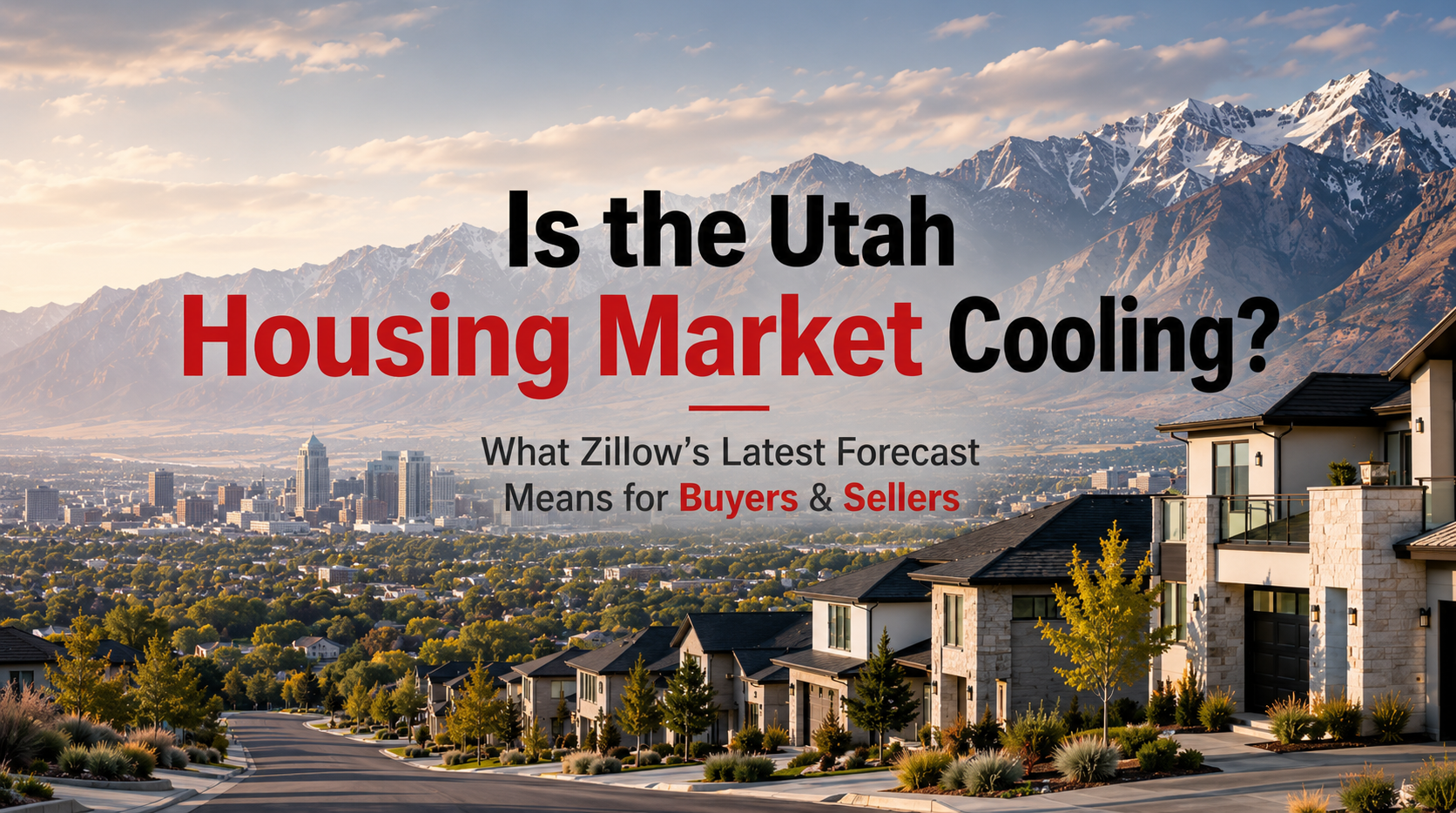
The Utah housing market has been one of the hottest in the nation over the past several years. Rising home prices, limited inventory, and intense competition have defined the buying and selling experience for families, investors, and new homeowners alike. But as we move deeper into 2026, signs of a shift are becoming clearer. Zillow’s most recent forecast indicates that while the market is not collapsing, it is cooling, and the dynamics for buyers and sellers are evolving in meaningful ways.
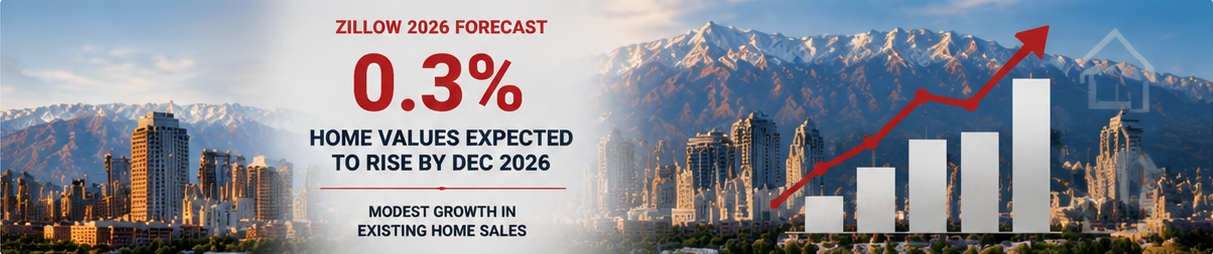
Zillow projects that U.S. home values will increase by only 0.3% by December 2026, with existing home sales growing only modestly. National trends always influence local markets, but Utah’s housing landscape remains unique due to population growth, strong employment hubs, outdoor lifestyle appeal, and limited land in key areas along the Wasatch Front. These factors create variations between cities like Salt Lake City, Lehi, St. George, Park City, and Ogden. What this means is that while some parts of Utah are seeing slower price growth and more negotiating power for buyers, other areas remain highly competitive, particularly in desirable neighborhoods or communities with limited new construction.
Understanding Zillow’s 2026 Forecast
Zillow’s outlook reflects a national trend toward a more balanced housing market. Several factors contribute to this:
- Increased Inventory – More homes are available for buyers to choose from compared to the peak years of 2021–2023.
- Slower Buyer Demand – Higher mortgage rates continue to temper aggressive buyer behavior, particularly for first-time buyers and move-up buyers sensitive to monthly payments.
- Limited Price Growth – With supply beginning to catch up with demand, home appreciation is expected to slow significantly.
For Utah, the implications are significant. A cooling market means that buyers may no longer face bidding wars for every listing, while sellers must carefully consider pricing strategy and presentation to attract serious offers. Homes that are not properly staged or priced may sit longer, leading to eventual price reductions.
Current Market Conditions in Utah
Statewide Trends
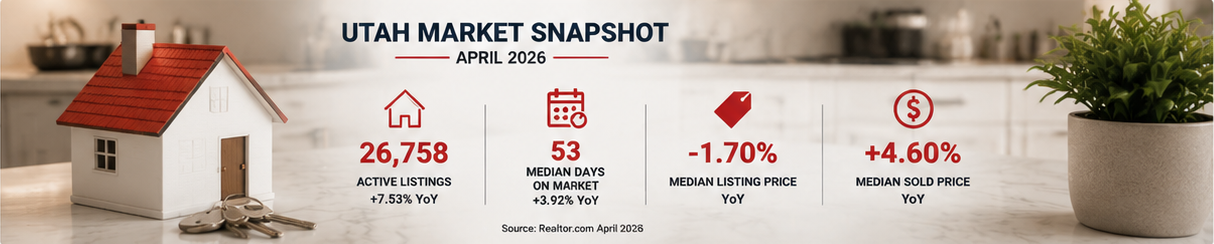
As of April 2026, Utah had approximately 26,758 active listings, representing a 7.5% increase year-over-year. The median days on market reached 53 days, and the median listing price was $566,082, slightly down 1.7% from the previous year, while the median sold price remained $517,081, up 4.6% year-over-year. These numbers indicate that while homes are still appreciating overall, sellers are facing more realistic market conditions, and buyers now have more negotiating room.
Zillow data shows that the average home value in Utah was $540,993 in April 2026, with 58% of homes selling below the list price. This underscores the increased influence buyers hold in many markets, a notable shift from the competitive frenzy of past years.
Regional Insights
Salt Lake County and Salt Lake City
Salt Lake County remains a cornerstone of Utah’s housing market. The county combines strong employment opportunities, established neighborhoods, convenient transportation, and lifestyle appeal. Zillow reports the average home value at $577,339, with homes pending within approximately 15 days, reflecting a market that is competitive but slightly more negotiable than in previous years. Cities such as Salt Lake City, Sandy, Draper, and South Jordan demonstrate considerable variation by neighborhood, with updated and well-located homes selling quickly, while others linger longer on the market.
Utah County
Utah County, including cities like Lehi, Provo, Orem, and Eagle Mountain, continues to see strong demand driven by population growth and tech-sector employment. Population estimates from the Kem C. Gardner Policy Institute indicate that Utah County accounted for a substantial portion of statewide growth in 2025. Despite this growth, the presence of new construction in these areas gives buyers more choices, meaning sellers must compete with both resale and new homes offering modern finishes and incentives.
Southern Utah and Washington County
Southern Utah, particularly St. George and surrounding cities, remains attractive for retirees, remote workers, and lifestyle-driven buyers. Realtor.com data shows median listing prices in St. George around $555,000, with median closed prices slightly lower due to concessions and negotiation. Buyers in these markets are sensitive to total monthly costs, including HOA fees, insurance, and property taxes.
Resort Markets: Park City and Wasatch Back
Luxury markets such as Park City, Heber, and Summit County operate differently. Median listing prices in Park City are reported at $2,000,000, driven by second-home demand, short-term rental opportunities, and affluent buyers. These markets may see slower transactions for specific price ranges but remain insulated due to the unique lifestyle and investment appeal.

What This Means for Utah Home Buyers
Buyers May Have More Room to Negotiate
In many Utah markets, buyers no longer need to assume that the asking price is the starting point for a bidding war. Zillow reported that 58.0% of Utah sales closed under list price as of March 31, 2026. That does not mean every seller will accept a low offer, but it does show that below-list negotiations are already happening statewide.
The strongest opportunities often appear when a listing has been sitting longer than comparable homes, has already had a price reduction, competes directly with new construction, or needs updates that buyers can reasonably price into their offer.
Buyers Should Focus on Total Cost, Not Just Price
A lower list price does not always mean a better deal. Buyers should compare the full monthly cost, including mortgage payment, property taxes, insurance, HOA dues, utilities, and likely repairs. This is especially important in Utah communities where newer townhomes, condos, and planned developments may come with HOA fees that affect affordability.
Buyers Should Compare Neighborhood-Level Data
A buyer looking at homes in Salt Lake City will not face the same conditions as a buyer looking in Eagle Mountain, St. George, Park City, or Ogden. Realtor.com’s city-level data shows major differences across Utah cities, with median listing prices ranging from $442,000 in Cedar City to $2,000,000 in Park City among the cities listed in its Utah market page.
A Smart Buyer Strategy for 2026
The best strategy is to be patient but prepared. Buyers should watch days on market, price reductions, seller concessions, and comparable sales. When a home is fairly priced and fits the buyer’s needs, hesitation can still cost them. But when a home is overpriced or sitting, negotiation may be appropriate.

What This Means for Utah Home Sellers
Pricing Correctly Matters More Than Ever
For sellers, the biggest change is that the market is less forgiving. If a home is priced too high, buyers may simply move on to the next option. With statewide active listings up and days on market rising, sellers cannot rely on scarcity alone to create urgency.
A strong pricing strategy should be based on recent comparable sales, active competition, condition, location, and current buyer demand. Sellers should be cautious about using peak-era pricing as the benchmark. The right question is not “What could this home have sold for two years ago?” The right question is “What will today’s buyers pay compared with the other homes available right now?”
Presentation Can Protect Value
In a balanced or cooling market, presentation matters more. Buyers have more options, so they are less likely to overlook poor photos, deferred maintenance, clutter, or unrealistic pricing. Homes that are clean, well-staged, professionally photographed, and easy to show are better positioned to stand out.
Sellers Should Watch Early Market Feedback
The first two weeks of a listing can reveal a lot. If online views are weak, showings are limited, or buyers consistently give the same negative feedback, sellers should respond quickly. Waiting too long can make a listing feel stale, and repeated small price reductions may attract bargain hunters instead of serious buyers.
Concessions May Become Part of the Conversation
Seller concessions, closing-cost credits, repairs, and rate buydowns may become more common when buyers have more choices. Utah Association of Realtors notes that its reported median sales prices do not account for seller concessions, which means the headline sales price may not always show the full negotiation behind the transaction.
Investor Considerations
Investors need to focus on fundamentals rather than relying solely on rapid appreciation:
- Rental Potential: Evaluate local rent levels, vacancy rates, and market demand.
- Costs: Include property taxes, insurance, HOA fees, and maintenance in calculations.
- Location Matters: Submarkets differ drastically, from Utah County townhomes to Park City luxury properties.
In 2026, informed decisions based on solid financial and market analysis are more important than ever.
Conclusion
Utah’s housing market in 2026 is transitioning. Cooling does not equal collapse. The market remains strong overall, with appreciation still occurring in many areas, but buyers are more empowered, and sellers must adapt to a market where realistic pricing and quality presentation drive results. Whether you are a first-time buyer, a seasoned seller, or an investor, understanding local dynamics, population trends, and interest rate impacts is essential for success.
For personalized guidance and a strategy tailored to your city or neighborhood, contact The Red Sign Team today. Their local expertise ensures you navigate Utah’s evolving housing market with confidence, whether buying, selling, or investing.
Red Sign Team
Real Estate Team | Red Sign Team | KW Westfield
or another way