Categories
Relocation Guide, Utah Real Estate Market UpdatesPublished July 8, 2026
Moving to Utah? Here's the Truth About the Great Salt Lake


If you are moving to Utah from out of state, there is a good chance someone has already sent you an article about the Great Salt Lake drying up. Maybe a friend forwarded a photo of cracked, pale lakebed. Maybe you saw a headline about dust storms rolling through the Wasatch Front. It is a fair question to ask before you buy a home here, and we would rather answer it directly than pretend it does not come up.
At Red Sign, we talk to relocating buyers every week who are excited about Utah's mountains, job market, and neighborhoods, but who also want an honest answer about what is happening at the lake and what it means for daily life in places like Davis County, Weber County, and North Salt Lake. This guide walks through what is actually going on, which communities are affected, what the state is doing about it, and how to think about it as part of your home search.
WHY BUYERS MOVING TO UTAH ARE ASKING ABOUT THE GREAT SALT LAKE
It makes sense that this comes up. The Great Salt Lake has shrunk significantly over the past several decades, and as more of the lakebed is exposed, it can release dust into the air. That dust has drawn national attention, including comparisons to other dried-up lakes in the American West.
For someone relocating to Utah, that is a legitimate factor to weigh, right alongside school districts, commute times, and home prices. We would rather walk you through the real picture, including the parts that are genuinely still being worked on, than have you make a decision based on a single headline.
WHAT IS ACTUALLY HAPPENING TO THE GREAT SALT LAKE
The Great Salt Lake is a terminal lake, meaning water flows in but has no natural outlet, so it only leaves through evaporation. Decades of water diversion for agriculture, industry, and growing cities, combined with a prolonged regional drought, have pulled the lake down well below its historical average.
Where the Lake Stands Right Now
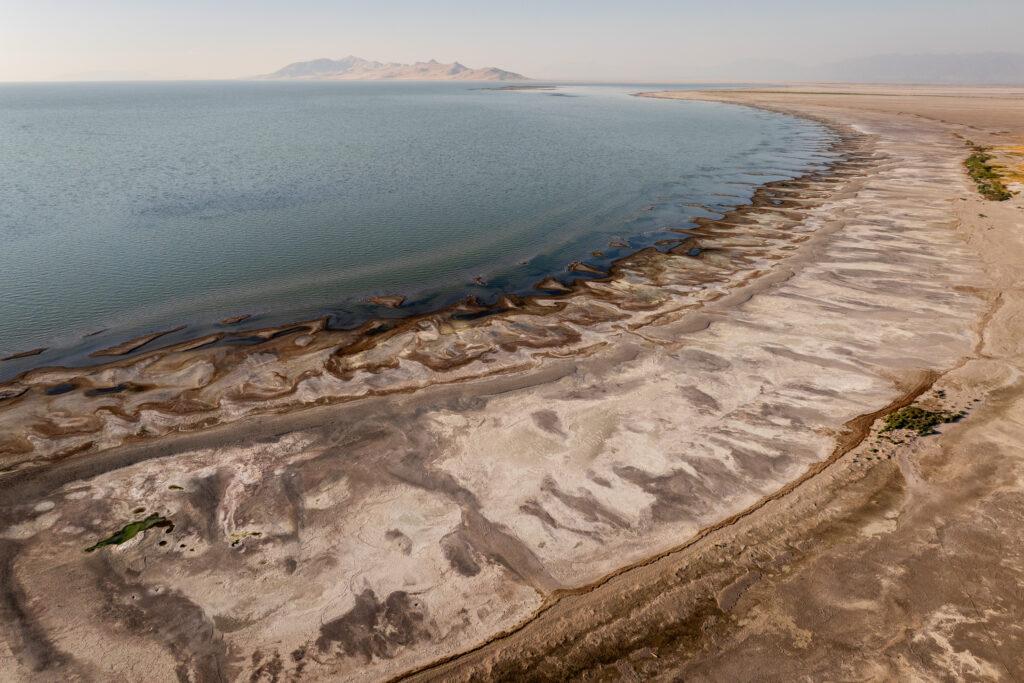
As of the close of the 2025 water year, the lake's south arm sat at an elevation of about 4,191 feet, its third-lowest recorded level in more than 120 years of record keeping. That is roughly three feet above the all-time record low of 4,188 feet set in November 2022, but it is also about seven feet below the 4,198-foot elevation that state scientists consider the minimum for a healthy lake. State reports currently describe the lake as back in the "serious adverse effects" range.
What Is in the Exposed Lakebed
More than 800 square miles of lakebed are now exposed to wind. That matters because the exposed sediment contains naturally occurring metals, including arsenic, along with residue from more than a century of mining, agricultural runoff, and industrial activity in the region. When strong wind events move through, they can lift fine dust particles into the air, which is where the health concern comes from. Roughly three-quarters of the lakebed is protected by a natural crust, but that crust is fragile and breaks down with erosion or disturbance.
HOW THIS AFFECTS HOMES IN DAVIS COUNTY, WEBER COUNTY, AND NORTH SALT LAKE
This is the part most relevant to your home search, so let us be specific rather than vague.
The Two Hotspots That Matter Most
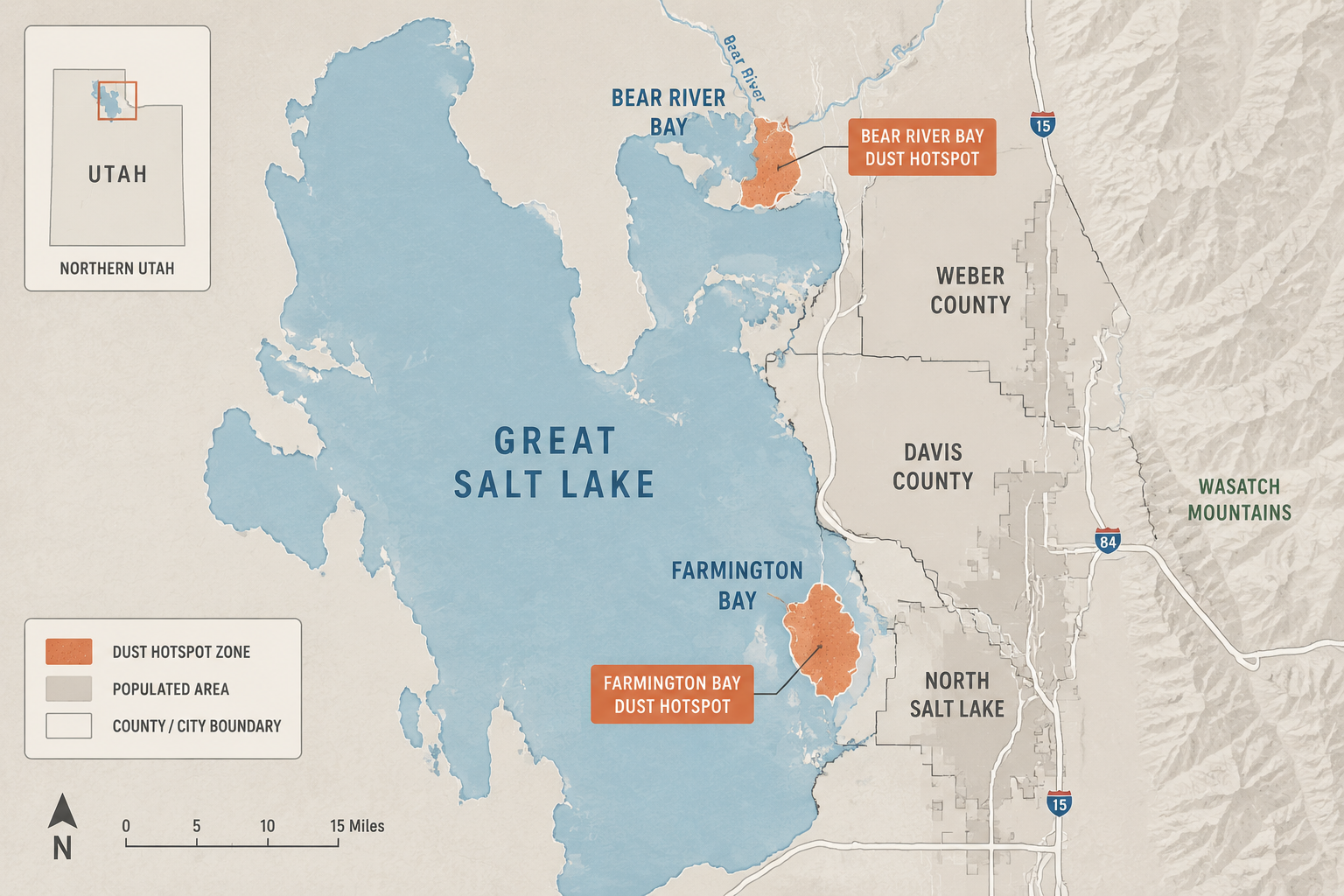
Researchers have identified specific hotspots where the exposed lakebed is most active, rather than dust being a lakewide issue. Farmington Bay, the shallow southern arm of the lake, has dried up significantly over the past decade and is now considered one of the most active dust sources in the entire Great Salt Lake basin. It sits closest to Davis County. Bear River Bay, further north, is the other major hotspot, closer to Weber and Box Elder counties.
Which Cities Are in the Path
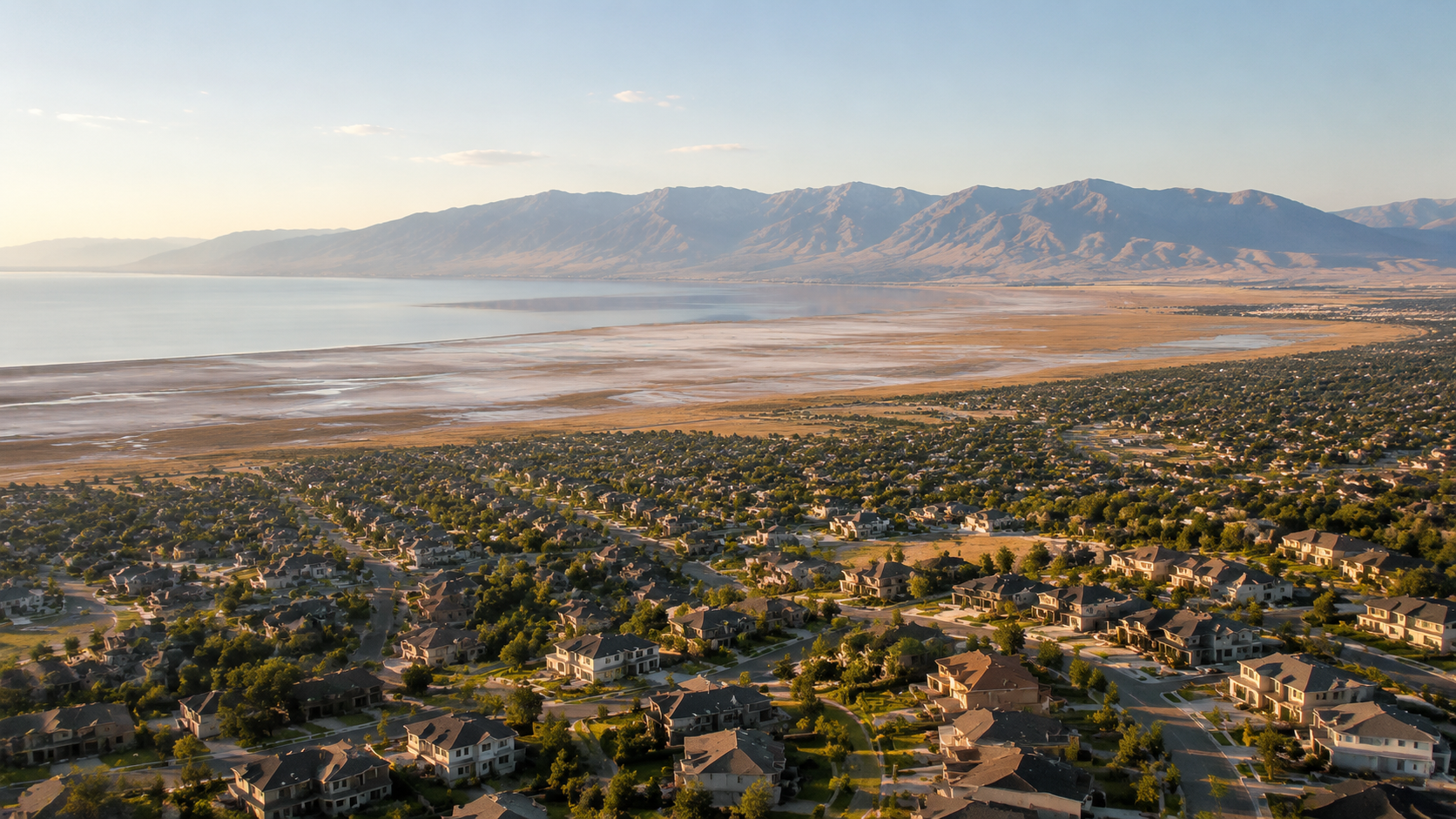
Because Farmington Bay sits downwind of prevailing southern winds relative to several Davis County communities, dust events there have most often been documented reaching Layton, Syracuse, Clearfield, and Ogden. North Salt Lake, Woods Cross, Bountiful, and Centerville sit closer to the lake's southern shoreline and are also within the region state air quality officials are watching most closely. That said, wind direction, distance from the shoreline, and local terrain all shape how often any individual neighborhood actually experiences a dust event.
What This Does Not Mean
It does not mean these communities are unsafe to live in or that home values are collapsing. If anything, the Utah real estate market tells a more encouraging story here. Davis County's housing market has held up well, supported by Hill Air Force Base, which employs tens of thousands of people directly and indirectly and creates a steady, credit-qualified buyer pool that has historically cushioned Layton, Clearfield, and Syracuse from the volatility seen in more speculative markets.
North Salt Lake and Bountiful continue to benefit from Salt Lake City commuter demand, and limited buildable land between the Wasatch Front and the lake has kept inventory tight in established cities like Bountiful, Centerville, and Kaysville. Local forecasts for 2026 point to continued, if moderate, price appreciation across Davis County.
WHAT UTAH IS ALREADY DOING TO FIX IT
This is the piece that often gets left out of national headlines, and it is a big one. Utah has treated the lake's decline as a top state priority for several years now, and the response has been substantial in both funding and policy.
1. Funding Committed Since 2022
The Utah Legislature has appropriated more than $300 million specifically for Great Salt Lake conservation since 2022. That includes $40 million to establish the Great Salt Lake Watershed Enhancement Trust, roughly $200 million toward agricultural water optimization programs that help farmers use less water while maintaining crop output, and $30 million in 2026 to purchase 144,000 acre-feet of water rights annually from US Magnesium, a former mineral extraction operation on the lake's south shore that had been withdrawing water from the system. That purchase lets the state halt unnecessary withdrawals from the lake's south arm going forward. On top of state funding, the federal government delivered a $60 million wetlands settlement in 2026, and a cumulative total of more than 163,000 acre-feet of water has been voluntarily donated to the lake by conservancy districts, The Church of Jesus Christ of Latter-day Saints, and private water-rights holders.
2. Legislation Changing How Water Reaches the Lake
Utah created a dedicated Great Salt Lake Commissioner position in 2023 to oversee the lake's long-term health, and lawmakers have since passed multiple bills making it easier for water-rights holders to lease or donate water to the lake instead of routing it exclusively to agriculture or municipal use. In the 2026 session, the Legislature also passed a resolution formally asking the federal government to become a funding partner in the lake's restoration.
3. Expanded Monitoring Where It Matters Most
Utah's air quality network added nine new dust-monitoring stations statewide in 2025 and upgraded 13 existing sites, as part of the Utah Dust Observation and Research Network. State officials have specifically prioritized new PM10 particulate monitors in Davis and Weber counties, since these are the counties closest to the most active dust hotspots. Until this monitoring network is fully built out, researchers have been candid that Utah has lacked the consistent data needed to say definitively whether dust events are increasing in frequency or severity, which is exactly why this expansion matters.
4. Real Mitigation Options on the Table
University of Utah researchers, working with the Great Salt Lake Commissioner's office, have published a comprehensive study of practical dust control options, ranging from shallow flooding of exposed hotspots to gravel cover and surface stabilization. One specific finding stands out for Davis County residents: preliminary analysis shows that temporarily raising water levels in Farmington Bay to around 4,199 feet could submerge roughly 58 percent of the mapped dust hotspots there, directly reducing dust exposure for the communities closest to that bay.
5. An Honest Look at the 2034 Target
Governor Cox has set a public goal of restoring the Great Salt Lake to a healthy level by 2034, the year Salt Lake City hosts the Winter Olympics again. It is a real target with real funding behind it, but it is worth being straightforward about where things stand. The state's own 2026 Strike Team report estimates the lake would need an additional 800,000 acre-feet of water per year to have roughly a 47 percent chance of reaching a healthy level by that date.
In other words, the trajectory is meaningfully positive and well funded, but 2034 is an ambitious goal the state is actively working toward, not a guarantee already locked in. Independent water policy groups that track the Utah housing market's connection to lake recovery have generally agreed 2026 was a strong year for funding, while also noting that reducing municipal and industrial water use, which now accounts for more than a quarter of all water diverted from the basin, remains the biggest unresolved piece of the puzzle.

MOVING TO UTAH IN 2026: WHAT THIS MEANS FOR YOUR HOME SEARCH
If you are relocating to Utah and the Great Salt Lake is on your radar, here is how we would suggest thinking about it.
Ask About Proximity, Not Just County Lines
A home in Farmington a mile from the shoreline is a different conversation than a home in Layton several miles inland. Your agent should be able to speak to this specifically, street by street, not just at the county level.
Look at the Broader Picture
Utah's population continues to grow quickly, home values along the Wasatch Front have remained resilient, and the job market, outdoor access, and school systems continue to draw people here. When people ask us about the best places to live in Utah, the lake is one factor among many, not the deciding one, and in counties like Davis, strong local employers and limited buildable land have historically supported home values even through other kinds of uncertainty.
Talk to Someone Who Lives Here
National articles are written for a national audience. A Utah-based agent who works in these neighborhoods every week can tell you which streets have dealt with dust after a windstorm and which ones never notice it at all. That kind of ground-level knowledge does not show up in a headline.
COMMON MISTAKES OUT-OF-STATE BUYERS MAKE
- Ruling out an entire county based on one article. Dust hotspots are localized to specific bays, not spread evenly across Davis or Weber County. Painting the whole region with the same brush means missing out on strong neighborhoods that rarely deal with it.
- Assuming nothing is being done. Utah has committed more than $300 million in state funding since 2022, plus federal partnership dollars, active legislation, and an expanding monitoring network. This is a funded, tracked, actively managed effort.
- Assuming it is already solved. The opposite mistake is just as common. The 2034 target is a genuine goal with real momentum behind it, but the state's own data shows there is still significant work left, particularly around municipal water use. A good agent should be willing to tell you both sides honestly.
FREQUENTLY ASKED QUESTIONS
Q: Is it safe to move to Utah because of the Great Salt Lake?
Yes, for the vast majority of the Wasatch Front, including most of Davis and Weber counties. Dust events are localized to specific hotspots near Farmington Bay and Bear River Bay, and the state is actively monitoring and addressing air quality in those areas.
Q: Which cities are closest to the Great Salt Lake dust hotspots?
Layton, Syracuse, Clearfield, and Ogden have most often been documented in the path of dust events from Farmington and Bear River Bays. North Salt Lake, Woods Cross, Bountiful, and Centerville sit closest to the shoreline itself. Homes further inland in these same counties are generally less affected.
Q: Is Utah actually fixing the Great Salt Lake problem?
Utah has appropriated more than $300 million since 2022 for water rights purchases, agricultural efficiency upgrades, and lake restoration, plus a $60 million federal wetlands settlement in 2026. The state has set a goal of restoring the lake to a healthy level by 2034, though its own data currently puts the odds of hitting that target at roughly 47 percent without additional water. Real progress is happening, and real work remains.
Q: Should the Great Salt Lake change my decision about moving to Utah?
It should be one factor in your research, similar to how you would research any regional environmental issue before relocating. It should not be the only factor. Home values in Davis County, for example, have remained resilient thanks to strong local employers and limited buildable land.
Q: What is the best way to evaluate a specific neighborhood near the lake?
Talk to a local agent who can speak to that specific street or subdivision, not just the county name. Proximity to the shoreline, prevailing wind patterns, and current air quality monitoring data all matter more than the county line alone.
THE BOTTOM LINE
The Great Salt Lake is a real environmental challenge, and Utah has met it with real money, real legislation, and a real deadline. For Davis County, Weber County, and North Salt Lake specifically, the dust concern is localized to a couple of known hotspots, not spread evenly across the region, and home values in these areas have continued to hold up well. Moving to Utah does not mean ignoring this issue. It means understanding it clearly enough to make a confident decision.
Moving across state lines is a big decision, and you deserve a straight answer, not a sales pitch. Talk to a Red Sign agent about the neighborhoods you are considering, including how factors like the Great Salt Lake actually play out on the ground. Contact Red Sign to get started.
Red Sign Team
Real Estate Team | Red Sign Team | KW Westfield
or another way