Categories
Real Estate Market Insights, Utah Real Estate NewsPublished June 25, 2026
Provo Is the Best Run City in America Again
Written by Red Sign Team
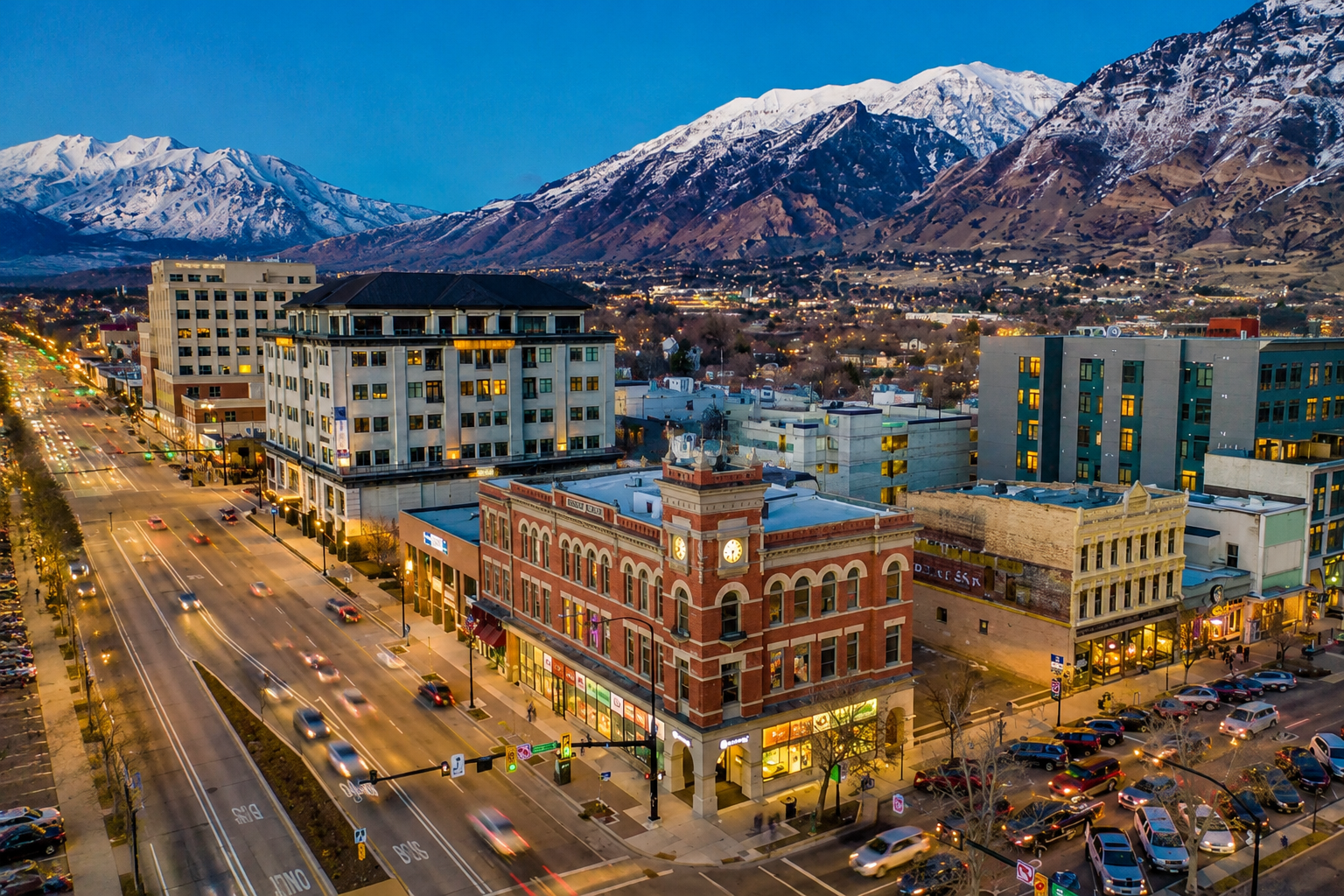
Provo is the best run city in America again for 2026, according to WalletHub’s latest government efficiency rankings. That result is not based on housing prices, lifestyle appeal, or livability scores. It comes from a system level evaluation of how effectively the city converts public spending into outcomes like safety, education performance, infrastructure quality, and economic stability. It is a measurement of operational efficiency, not a consumer ranking of where people want to live.
That distinction matters because in Utah County, signals like this do not stay abstract. They influence how buyers perceive stability, how relocation patterns form, and how long term housing demand builds across Provo and surrounding cities like Orem, Lehi, and Springville. This article breaks down what the ranking actually measures, why Provo continues to outperform larger US cities, and what it realistically signals for Utah County real estate right now.
WHAT IT REALLY MEANS
Provo being the best run city in America again for 2026 is often interpreted as a lifestyle endorsement, but that is not what the ranking measures. It is based on government efficiency, meaning how well the city converts public spending into measurable outputs like safety, education performance, infrastructure quality, and economic stability. It does not evaluate affordability, housing access, or overall livability.
This distinction is critical because it separates perception from mechanism. Before connecting this ranking to Utah County real estate, you have to understand that it is not describing how desirable the city feels, but how efficiently its systems operate per dollar spent.
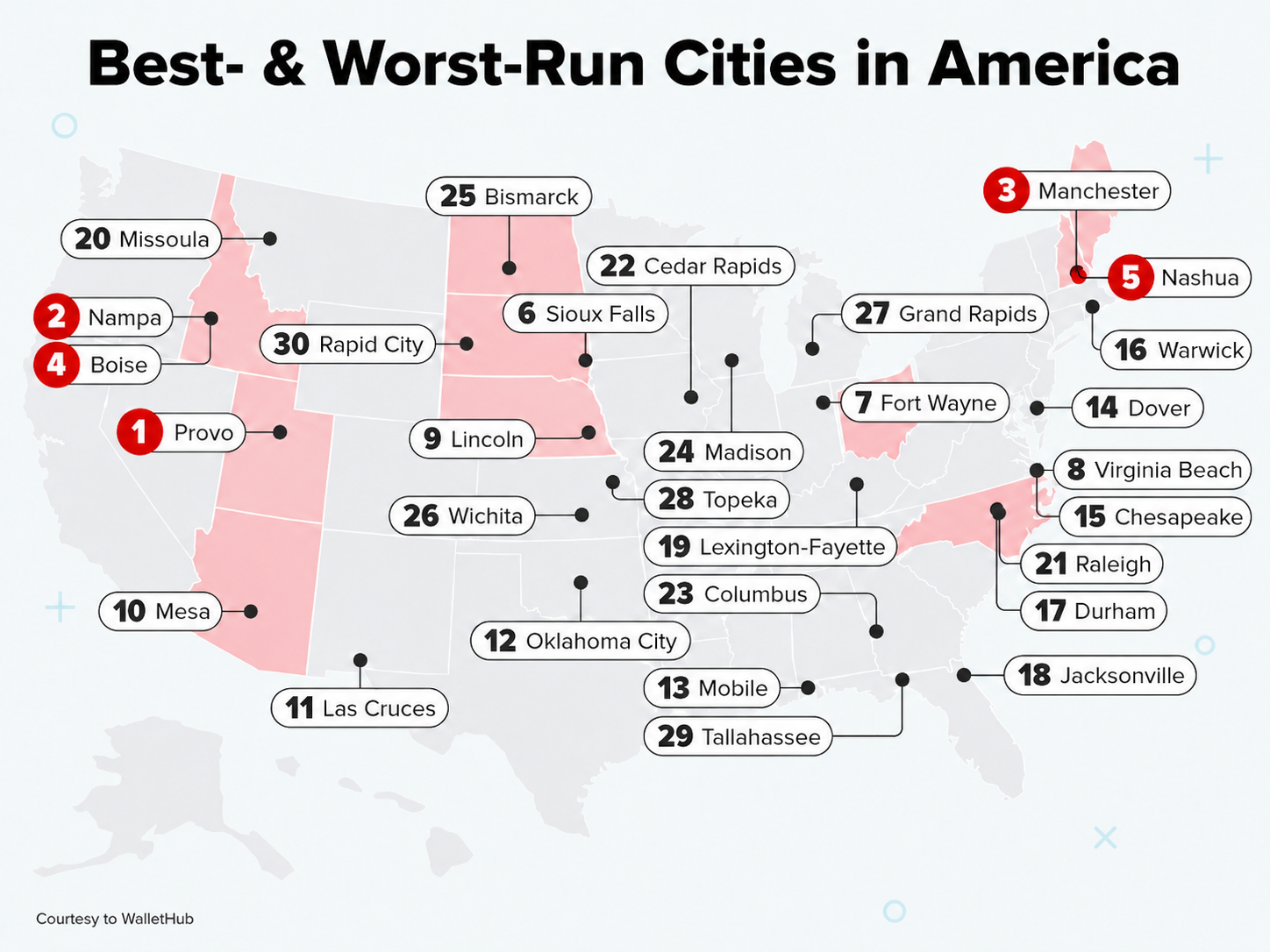
The ranking measures output per dollar, not livability or affordability
WalletHub evaluates 148 major US cities using 36 metrics across six categories: safety, education, health, infrastructure, economy, and financial stability. Each category is measured against per capita spending, which means cities are ranked on efficiency rather than size, wealth, or quality of life.This creates a common misunderstanding. A city does not need to be expensive or highly developed to rank well. It needs to avoid inefficiency.
Key measurable inputs include:
- Crime rates compared to national FBI benchmarks
- Education outcomes such as graduation rates
- Infrastructure reliability and municipal service performance
- Economic stability and business growth consistency
- Fiscal management relative to city budget size
Provo consistently ranks high because it is structurally balanced across every major system
Once the measurement system is clear, Provo’s consistency becomes easier to understand. The city does not rely on one dominant category. Instead, it maintains steady performance across all measured systems.
That balance appears in:
- Graduation rates near 91 percent
- Low violent crime relative to national averages
- Steady business growth above 5 percent in recent reporting cycles
- Reliable infrastructure and municipal service delivery
This structural balance is what allows Provo to rank at the top repeatedly rather than appearing as a one time outlier.
WHY IT SCALES DIFFERENTLY
Large cities often generate higher total economic output, but they also carry significantly higher structural complexity. That complexity reduces per-dollar efficiency even when resources are greater.Common constraints include:
- Higher infrastructure maintenance demands
- Larger administrative overhead
- Fragmented governance systems
- Increased debt and operational costs per resident
Provo fits this pattern. Its population size allows for more stable planning, while its economy is supported by education and tech-adjacent industries along the Wasatch Front. This creates consistency rather than volatility.
Efficiency rankings consistently reward that consistency.

WHY UTAH FEELS IT MORE
In most regions, efficiency rankings remain informational. In Utah County, they quickly become behavioral signals that affect housing demand.This happens because Utah already has:
- Strong inbound migration patterns (NAR data)
- Limited housing inventory (Zillow supply trends)
- High buyer competition across key submarkets
- Increased relocation interest from out-of-state buyers
- Stronger local confidence in long-term market stability
- Higher competition in constrained cities like Provo and Orem
That compression effect is what turns governance signals into real estate pressure.
THE BIGGEST MISUNDERSTANDING
One of the most common misunderstandings is assuming that a top ranked city should be easier or cheaper to buy into. That assumption does not match how efficiency rankings work.Efficiency does not measure affordability. It measures output per dollar spent.
In many cases, efficient cities experience stronger long-term demand because they:
- Attract relocation inflows
- Retain residents longer
- Build stronger perceptions of stability
In Utah County, this effect is amplified by population growth and structural supply constraints, which already limit housing availability. So instead of easing pressure, efficiency reinforces existing demand conditions.
WHAT IT MEANS NOW
For buyers, Provo remains a structurally competitive market where demand is supported by long-term demographic and geographic forces, not short-term cycles. Efficiency signals like this reinforce that stability rather than reduce competition.For sellers, national recognition strengthens buyer perception even when not explicitly referenced. Buyers respond to underlying signals of safety, stability, and long-term value confidence.
Red Sign Real Estate Team, a 20-agent team based in Orem with over 3,000 homes sold across Utah County, consistently sees that efficiency-ranked cities maintain deeper buyer demand even during broader market slowdowns.
FREQUENTLY ASKED QUESTIONS
Q: What does it mean that provo is the best run city again
It means Provo ranked #1 in government efficiency, measuring how effectively it turns public spending into outcomes like safety, education, and infrastructure performance.
Q: Is provo a good place to buy a home right now
Yes, but competition is strong because efficiency signals reinforce long-term demand in Utah County’s limited supply market.
Q: Does this ranking make provo more expensive
Not directly. But efficient cities often attract more demand over time, which can increase competition for housing.
Q: Why does provo rank higher than salt lake city
Larger cities often have higher complexity and operational costs, which lowers efficiency scores even with bigger budgets.
Q: How does this affect utah county home prices
It increases buyer confidence, strengthens relocation interest, and reinforces demand across Provo, Orem, and nearby cities.
Q: Should buyers wait right now
Waiting depends on strategy, but in structurally constrained markets like Utah County, demand signals tend to persist rather than fade.
BOTTOM LINE
Provo being the best run city in America again is not a lifestyle ranking or a marketing label. It is a measurement of how efficiently the city operates across core systems like safety, education, infrastructure, and economic stability. That level of efficiency does not stay isolated in government data. In a market like Utah County, it shows up in how consistently demand holds, how stable buyer competition remains, and how tightly housing activity responds to long-term growth pressure.
In a constrained environment like Provo and the surrounding Utah County cities, that stability does not reduce competition. It reinforces it. Buyers and sellers are not reacting to a headline in isolation. They are reacting to a broader pattern of structural demand that continues to compound over time.
If you are trying to understand what that means for your next move in Provo, Orem, or anywhere in Utah County, Red Sign Real Estate Team can help you break down how this impacts your actual position in the market right now and what strategy makes sense from here.
Tags
Utah County housing market, Provo Utah Real Estate, Provo Government Efficiency, Utah Housing Trends, Relocation to Utah, Best Run City in America
or another way
Request property marketing plan
You're one step away from getting a free marketing plan that shows how we'll sell your home for the most amount of money in the least amount of time — hassle free.