Categories
Market UpdatesPublished July 15, 2026
Utah Housing Market Update: Where Things Stand at Midyear

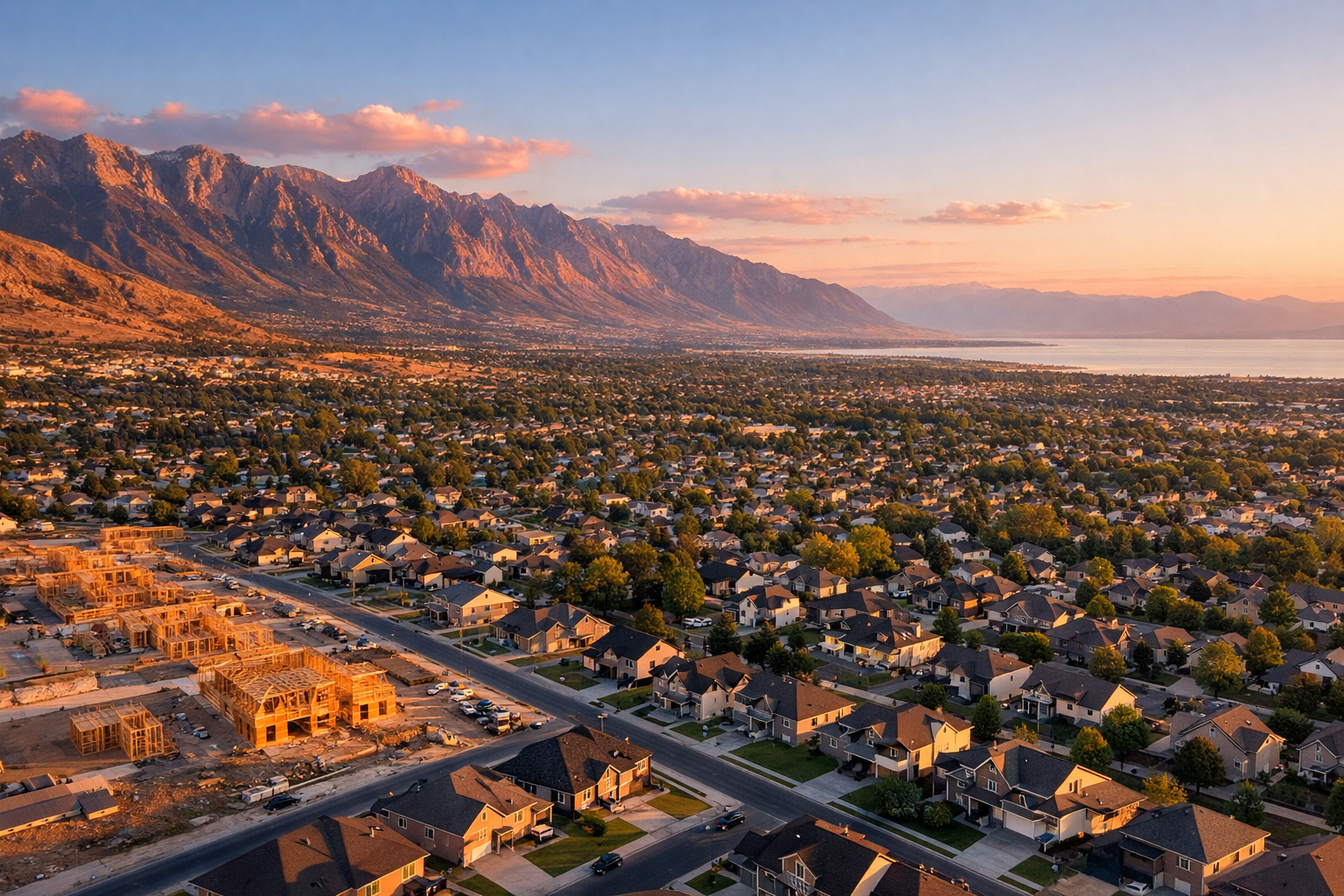
A home in Provo can still go under contract in three weeks. One in Salt Lake City might sell even faster. But drive through parts of Utah County right now and you will find listings that have been sitting since spring. That is the real story behind this Utah housing market update: after mortgage rates dipped below 6% in February and then climbed right back up, Utah's housing market split into several very different stories depending on where you are standing.
We track this county by county, city by city, and even project by project, because the number you see in a national headline rarely matches what is actually happening on your street. Below, you will find what the data from Utah, Salt Lake, Davis, and Weber counties says about prices and pace, where new construction is changing the game in cities like Lehi and Eagle Mountain, and what it all means for your next move.
A QUICK RECAP OF THE SPRING EVERYONE EXPECTED AND DIDN'T GET
Nationally, home shoppers had reason to feel optimistic heading into spring. Mortgage rates fell under 6% in February for the first time in years. That is usually the kind of number that pulls buyers off the sidelines in a hurry.
Instead, rising energy costs and inflation pushed rates back up before that momentum could build. The result was a market that settled into balance in some parts of Utah and stayed stubbornly competitive in others, rather than a single, predictable direction. That split is not bad news. It just means the right strategy depends entirely on where you are buying or selling.
WHAT THIS MEANS FOR UTAH HOME PRICES
That national picture plays out differently once you get up close. Statewide, the median sale price is holding in the $528,000 to $549,000 range depending on the source, with year over year growth in the low single digits. That is a far cry from the double digit swings buyers and sellers got used to a few years ago, and it is a good sign for long term market health.
Days on market have stretched out slightly across the state, and inventory has grown modestly rather than flooding the market. Together, those two shifts describe a market that is normalizing, not correcting. Sellers who accept that reality and price to today's data, rather than last year's headlines, are still closing deals quickly. But as the county breakdown below shows, that statewide average is hiding some real differences.
HOW THE WASATCH FRONT COUNTIES COMPARE
Utah real estate market conditions are not one story right now. Utah County has settled into balance, but drive twenty minutes north into Salt Lake County and the market feels completely different.
Salt Lake County Is Still a Seller's Market
Salt Lake County has not cooled off the way Utah County has. Inventory sits around 2.7 months of supply countywide, and in Salt Lake City proper it is even tighter at roughly 1.5 months. Median sale prices in Salt Lake City have climbed to around $685,000, up 7% year over year, and homes are still selling in under 30 days on average. If you are comparing homes for sale in Utah versus Salt Lake County, expect noticeably more competition and less negotiating room north of the Point of the Mountain.
Davis County Remains Tight and Fast Moving
Davis County, home to communities like Farmington, Kaysville, Layton, and Bountiful, is dealing with a different challenge: limited land. Squeezed between the Wasatch Front and the Great Salt Lake, Davis County has little room left for new construction, which keeps inventory tight even as buyer demand holds steady. Median prices are tracking in the low to mid $500,000s, and well priced homes are still moving in as few as 14 to 25 days.
Weber County Offers the Most Affordable Entry Point
Weber County, anchored by Ogden, remains the most affordable option along the Wasatch Front, with a median sale price around $424,000. Homes there are taking closer to 58 days to sell, giving buyers more room to negotiate than they would find in Salt Lake or Davis counties.
Where Utah County Fits In
Utah County sits right in the middle of these dynamics. It offers more new construction and more room to negotiate than tight, land constrained Davis County, and far more balance than Salt Lake County's still competitive market, while carrying higher price points than Weber County. While Red Sign's roots are in Utah County, our agents regularly work with buyers and sellers weighing options across Salt Lake, Davis, Weber, and Utah counties, since so many relocating and move up buyers are comparing more than one part of the Wasatch Front before deciding where to land.
UTAH COUNTY REAL ESTATE BY THE NUMBERS
Zooming into our home turf, Utah County real estate has spent 2026 finding its footing between the frantic pace of a few years ago and the slower, negotiation friendly conditions buyers have been hoping for. Countywide, inventory is sitting around four months of supply. Six months of supply is the textbook definition of a balanced market, so Utah County is still leaning slightly toward sellers, but buyers have far more breathing room than they did in 2022 or 2023.
The gap between what sellers ask and what buyers pay tells the real story. The average active listing across Utah County is priced around $793,666, while the average sold price lands closer to $603,405. That spread reflects a mix of aspirational pricing on higher end and new construction inventory, and a buyer pool that is doing its homework and negotiating hard.
Homes that are priced correctly are still moving. Countywide, roughly 55% of closings sold at or above list price, with a median sale to list ratio right at 100%. Overpriced listings, on the other hand, are the ones sitting for 90 days or more with no offers. Our Red Sign agents track this data city by city, not just countywide, because a single average can hide a lot of the real story.
City by City: Where the Volume and the Value Are
Every city in Utah County is telling a slightly different story right now.
- Saratoga Springs led the county in closed sales volume in a recent month, with a median price around $645,800, a 38 day median time on market, and 61% of homes selling at or above list.
- Lehi posted the highest median price among the high volume cities, near $701,900, moving in a brisk 29 days with 51% selling at or above list. Lehi continues to anchor the Silicon Slopes corridor for buyers who want new construction and tech sector proximity.
- Eagle Mountain remains the most affordable entry point for new construction among the busier cities, with a median price near $524,900 and 65% of homes selling at or above list.
- Provo is one of the fastest moving markets in the county thanks to BYU proximity and urban amenities, with homes going under contract in around 20 days at a median price near $514,000.
- Springville and Spanish Fork are the most affordable high volume cities in Utah County right now, with Springville homes moving in as few as 17 days.
If you are searching homes for sale in Orem UT, homes for sale in Provo UT, or homes for sale in Lehi UT, the pricing and pace can shift block to block, not just city to city. That is where local, on the ground guidance makes the biggest difference.
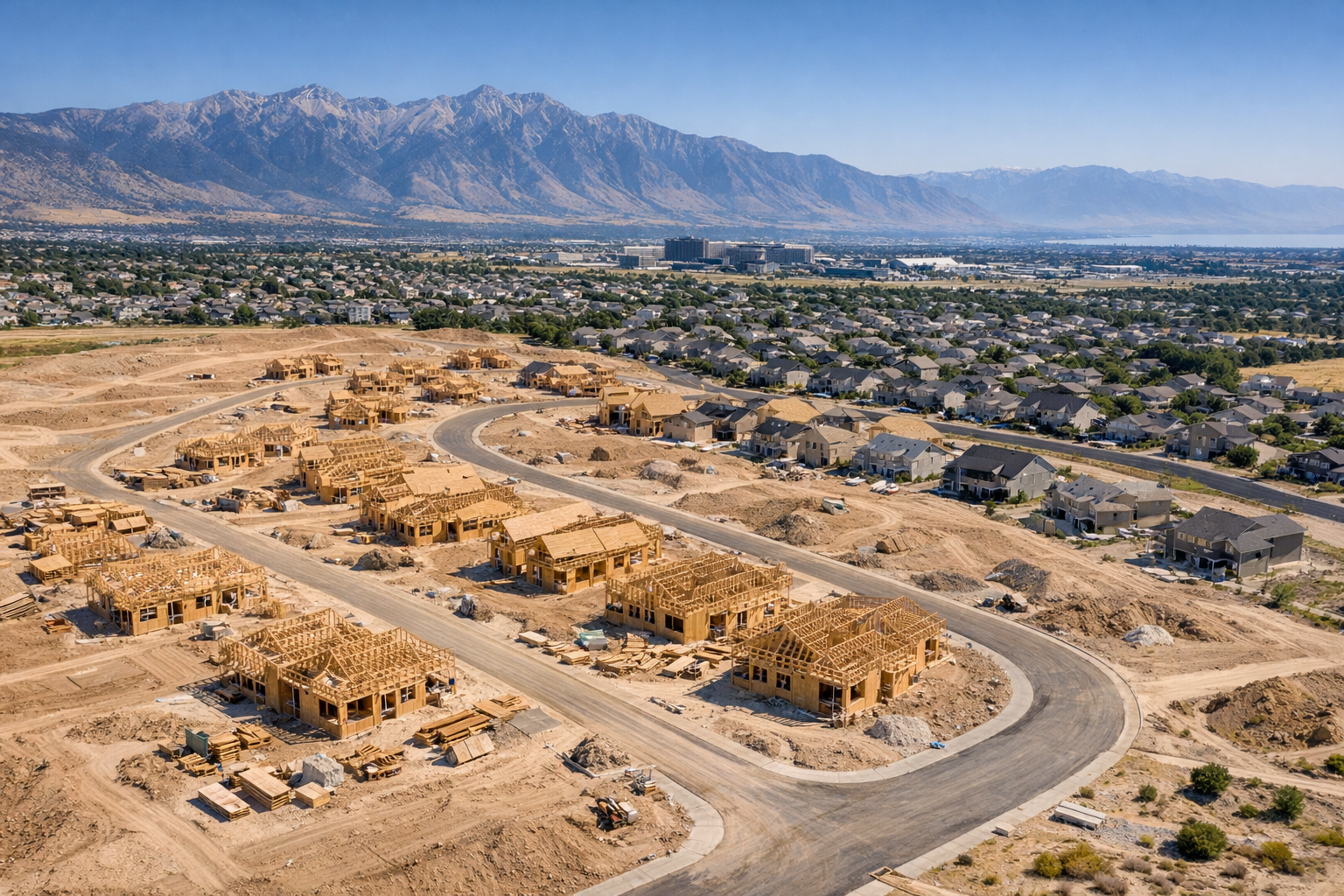
NEW CONSTRUCTION AND GROWTH RESHAPING UTAH COUNTY
Part of what makes Utah County real estate so dynamic right now is how much is being built, and where. Several of the county's fastest growing cities are in the middle of major infrastructure and housing pushes that will shape values for years, not just this season.
Lehi's Silicon Slopes Growth Keeps Accelerating
Lehi has grown from roughly 76,000 residents in 2020 to more than 90,000 today, making it one of the fastest growing large cities in the state. That growth is being fueled by major employers along the Silicon Slopes corridor, a new semiconductor manufacturing investment bringing added capacity online this year, and large residential projects like DR Horton's Inverness development, which is planned to bring thousands of new housing units to the west side of the city. A $621 million expressway project connecting I-15 to the Mountain View Corridor also broke ground this year, which should ease commute times for buyers weighing east versus west Lehi.
Eagle Mountain and Saratoga Springs New Construction
Eagle Mountain and Saratoga Springs continue to be two of the most active new construction markets in Utah County, with dozens of active residential projects moving through each city's planning pipeline this year. Saratoga Springs alone has multiple new phases underway in its Wildflower master planned community, while Eagle Mountain is seeing new master planned neighborhoods break ground near Utah Lake with mountain views and easy trail access. Both cities are also investing in infrastructure to keep pace, including new UTA park and ride facilities and a planned freeway extension through northwest Utah County.
If you are exploring Utah new construction homes, Red Sign works closely with trusted local builders including Valor Homes, Green Tech Construction, and Amundsen Construction, so you can compare new build options against resale inventory with a full picture of what is available.
INTEREST RATES IN UTAH AND WHY THEY STILL MATTER MOST
Interest rates in Utah track the national picture closely, and that dip below 6% earlier this year is a reminder of how quickly buyer behavior can shift when rates move. Even a half point change in your rate can swing your monthly payment by hundreds of dollars, which is exactly why so many Utah County buyers hit pause when rates ticked back up this spring.
If you are waiting for a perfect rate before you buy, it is worth talking through the math with someone who can run real numbers for your situation. A slightly higher rate today with the ability to refinance later is often a stronger move than waiting indefinitely for conditions that may not arrive on your timeline.
What This Means If You Are Buying in Utah County
- You have more time to think. Four months of supply means fewer instant, no contingency offers than the peak frenzy years.
- Correctly priced homes still move fast. Do not assume every listing will sit. In cities like Provo and Springville, well priced homes are still under contract in under three weeks.
- Watch the price per square foot, not just the sticker price. Comparing that number across Orem, Provo, Lehi, Eagle Mountain, Spanish Fork, and Saratoga Springs will tell you more about real value than the headline price alone.
- Get pre-approved before you tour. In a market where sellers are more willing to negotiate, a strong pre-approval still gives you leverage on price, closing costs, and repairs.
What This Means If You Are Selling in Utah County
- Price to today's comps, not last spring's. The gap between average asking price and average sold price in Utah County right now is a warning sign for anyone tempted to test the market high.
- First two weeks matter most. Homes that get real offers tend to get them early. A listing that lingers past 45 to 60 days often needs a price adjustment, not just patience.
- Presentation still counts. With buyers comparing more options than they have in years, small updates and clean staging can be the difference between multiple offers and a price cut.
- Know your city's pace. A home in fast moving Provo behaves very differently than one in a slower luxury segment, so your pricing and marketing strategy should match your specific market, not the county average.
FREQUENTLY ASKED QUESTIONS
Is it a good time to buy in Utah County right now?
For most buyers, yes. Inventory is more balanced than it has been in years, and correctly priced homes are still moving fast in cities like Provo and Springville. The bigger risk right now is waiting for a lower rate that may not arrive on your timeline while missing a home that fits your budget today.
Is Utah County a buyer's or seller's market in 2026?
It depends on the price point and the city. Countywide, four months of supply leans slightly toward sellers, but entry level homes under $500,000 in cities like Springville and Eagle Mountain still see strong competition, while higher priced listings give buyers more negotiating room.
How long does it take to sell a home in Utah County?
It varies widely by city. Provo and Springville are among the fastest, with well priced homes going under contract in around 17 to 20 days. Countywide, the average sits closer to 76 to 79 days, so pricing and presentation make a real difference.
Why haven't Utah home prices dropped even though the market has cooled?
Utah home prices have stayed largely flat rather than falling because demand has not disappeared, it has simply become more selective. Buyers are still purchasing homes, they are just negotiating harder and taking more time to compare options before committing.
How do interest rates in Utah affect what I can afford?
Even a small change in your mortgage rate can shift your monthly payment by hundreds of dollars, which changes what price range makes sense for your budget. Talking through real numbers with a local lender or agent, rather than relying on national headlines, gives you a much clearer picture of what you can actually afford in Utah County today.
Is Utah County a better market than Salt Lake County right now?
It depends on what you value most. Salt Lake County is still a tighter seller's market with faster sales and higher price growth, while Utah County offers more balance, more new construction, and more room to negotiate. Many buyers comparing the two end up choosing Utah County for the combination of value and growing inventory.
BOTTOM LINE
If there is one takeaway from this Utah housing market update, it is this: there is no single Utah market anymore. Salt Lake County is still moving fast, Davis County is holding tight on limited land, Weber County is the value play, and Utah County has settled into the kind of balance that rewards buyers and sellers who actually know the data for their specific city. Averages will not tell you whether to offer at list price in Provo or negotiate hard in a slower pocket of the county. Only current, local numbers will.
Still have questions about where the Utah real estate market is headed? We answer them every day. Reach out to the Red Sign team.

Red Sign Team
Real Estate Team | Red Sign Team | KW Westfield
or another way