
Published February 25, 2026
Is 2026 a Good Time to Buy or Sell a Home? Here's What the Data Says


If you've been wondering whether now is a good time to buy, sell, or simply stay put — you're not alone. The real estate market in 2026 looks very different from what we've seen in recent years. Red Sign recently had the chance to dig into Keller Williams' annual Vision Speech data, packed with research straight from the National Association of REALTORS®, Freddie Mac, the Federal Reserve, and more.
Here's what the numbers actually say and what it means for you.
The Market Is Recovering — Slowly but Surely
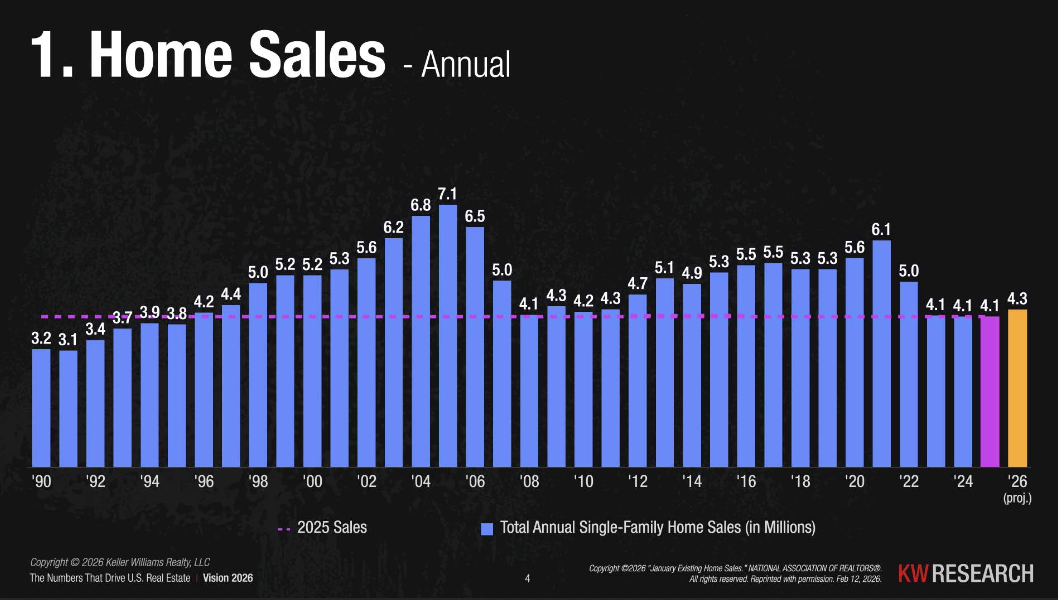
For the past few years, home sales volume has been stuck near historic lows. In 2023 and 2024, we saw only about 4.1 million homes sold annually — well below the long-term average. But here's the good news: 2026 is projected to bring roughly 4.3 million home sales, a meaningful step in the right direction.
To put it in perspective, the market peaked at 7.1 million sales back in 2005. We're not there yet — but the trend is turning upward.
What this means for you: More homes are expected to change hands this year. Whether you're a buyer or seller, there's more opportunity in 2026 than there has been in recent years.
Home Prices Are Still Going Up — But More Slowly
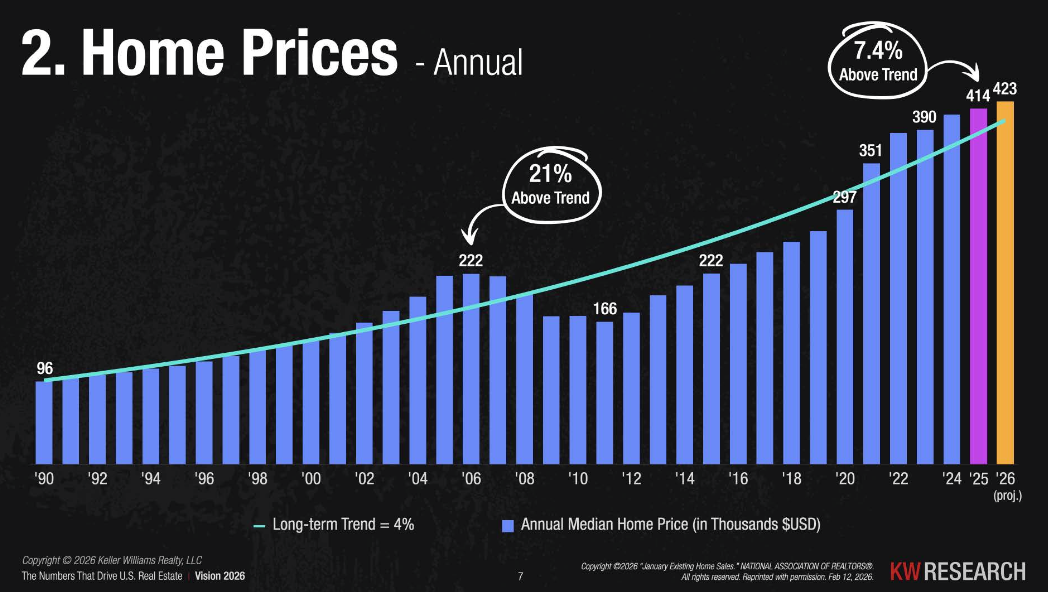
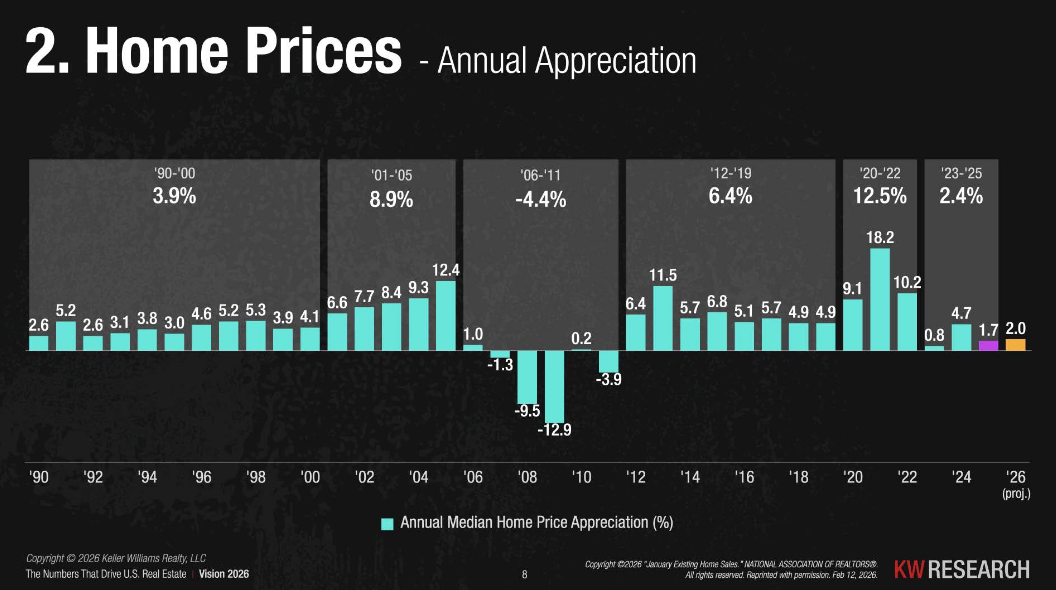
The median home price in the U.S. hit $414,000 in 2024 and is projected to reach $423,000 in 2026. That's about 7.4% above the long-term trend line — but compare that to the 18% appreciation we saw in 2022, and things are clearly cooling to a healthier pace.
The projected appreciation rate for 2026 is around 2% — right in line with normal, sustainable growth.
What this means for you: Home values are still growing, just not at the breakneck speed that priced so many people out a few years ago. If you've been waiting for prices to crash — that data doesn't support that happening. Real estate remains a wealth-building asset.
The "Lock-In Effect" Is Real — But It's Loosening
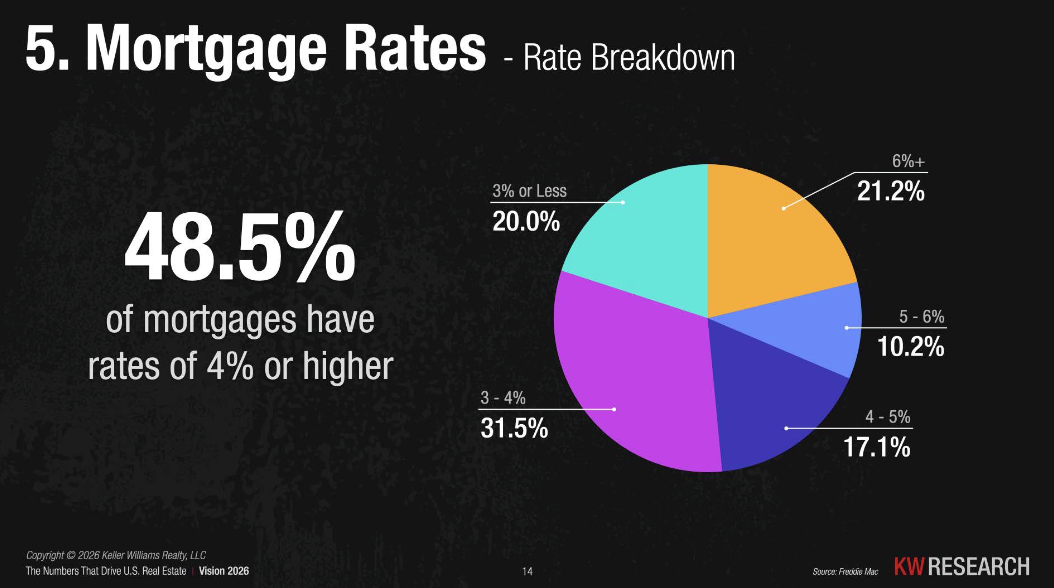
Here's one of the most important dynamics in today's market. Nearly half of all homeowners (48.5%) have a mortgage rate of 4% or higher — meaning they're not as "locked in" to ultra-low rates as you might think.
Yes, 20% of homeowners have rates at 3% or below, and it's understandable why they're hesitant to move. But a significant portion of sellers are already in a position where today's rates are more manageable — and life changes like retirement, job moves, or family growth are motivating them to act anyway.
[Insert Slide 13 — Mortgage Rates Monthly Chart]
The 30-year fixed mortgage rate was 6.10% in January 2026, down from a peak of 7.62% in late 2023. Projections put it around 5.90% for 2026. Not the 2-3% rates of 2020-2021, but historically, rates in the 6% range are normal and manageable.
What this means for you: If you've been waiting for rates to drop dramatically before buying or selling, you may be waiting a long time. Today's rate environment is much closer to the historical average than people realize — and buyers are adapting.
Inventory Is Finally Improving
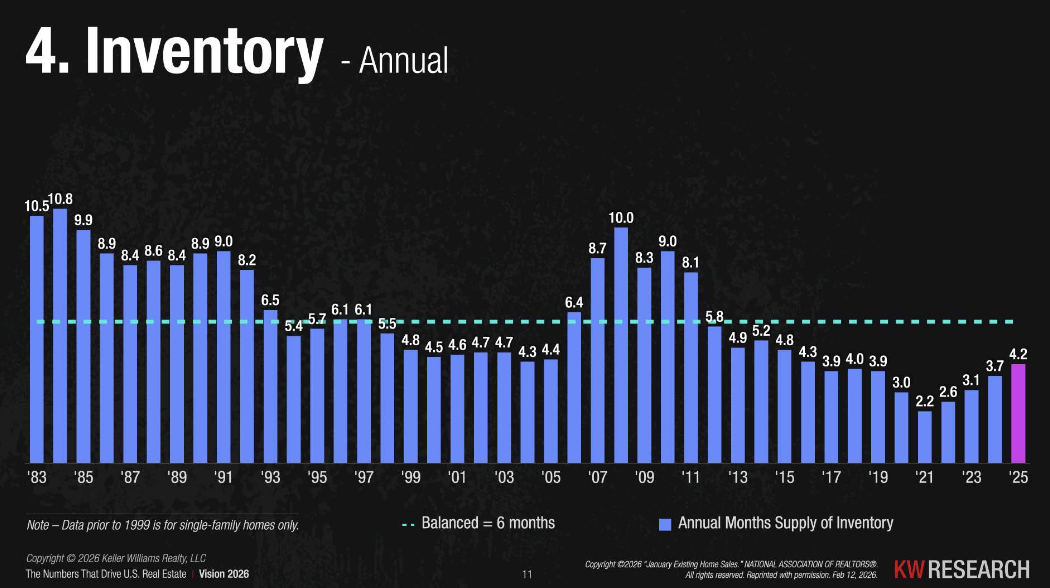
One of the biggest frustrations for buyers has been the lack of homes for sale. Inventory hit record lows of 2.2 months of supply in 2021 — meaning if no new homes came to market, everything would be sold in just over two months.
We've climbed back to 4.2 months of supply in 2025, still below the "balanced market" benchmark of 6 months, but meaningfully better. More inventory means more choices for buyers and a little less pressure on sellers to price perfectly out of the gate.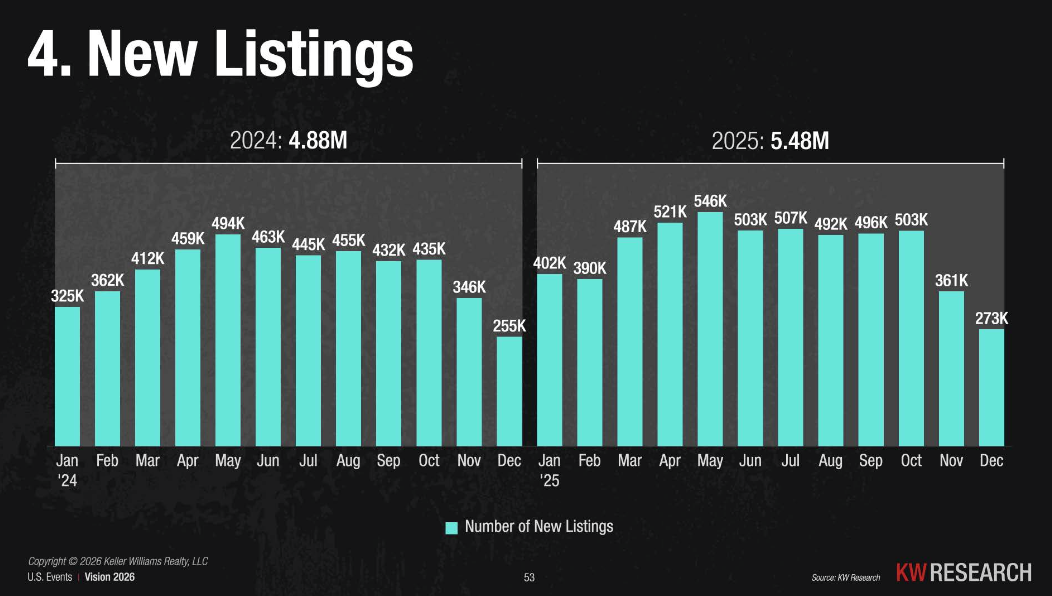
New listings are also rising. In 2025, 5.48 million new listings hit the market, up from 4.88 million in 2024. Sellers are starting to move again.
What this means for you: If you've struggled to find a home in recent years, 2026 offers a better selection. And if you're selling, pricing strategy matters more now than it did during the pandemic frenzy — but motivated buyers are absolutely out there.
Affordability Is Challenging — But Not Unprecedented
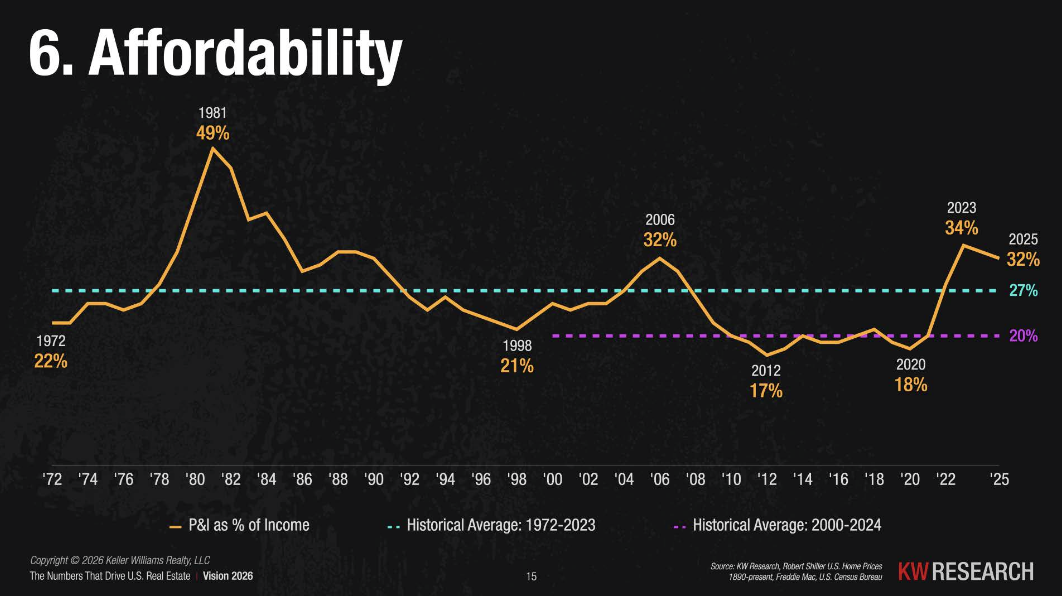
Let's be real: affordability is one of the biggest hurdles in today's market. Currently, the average buyer is spending about 32% of their income on principal and interest — above the long-term historical average of 27%, but below the all-time peak of 49% in 1981.
We've been here before and come through it. Incomes are still rising, and as rates gradually decline, affordability will continue to improve.
What this means for you: Buying a home today requires more planning and budgeting than it did a few years ago. But the long-term wealth-building case for homeownership is as strong as ever — and waiting carries its own cost, especially as prices continue to appreciate.
The Economy Looks Stable — With Some Uncertainty Ahead
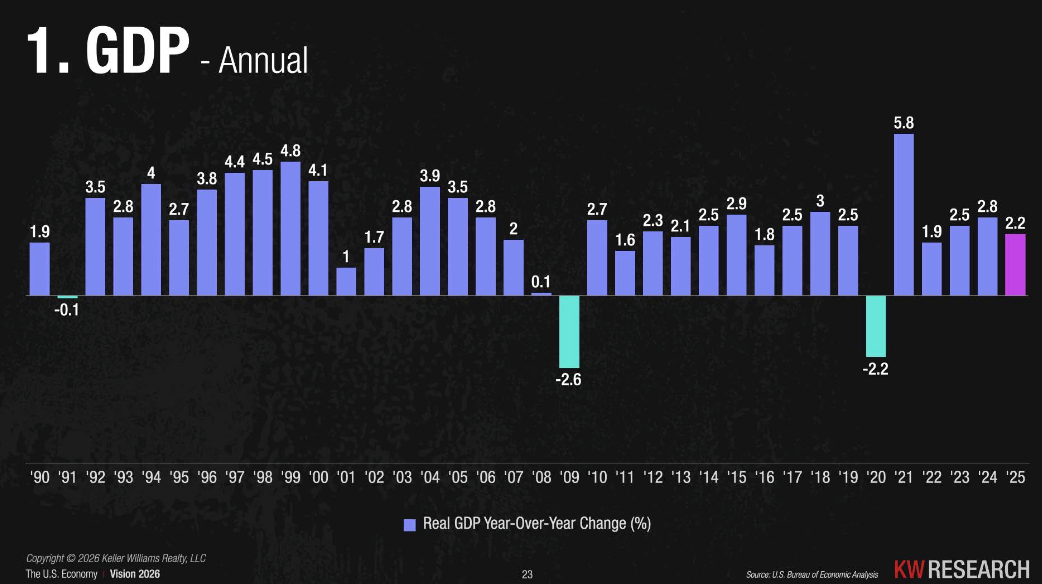
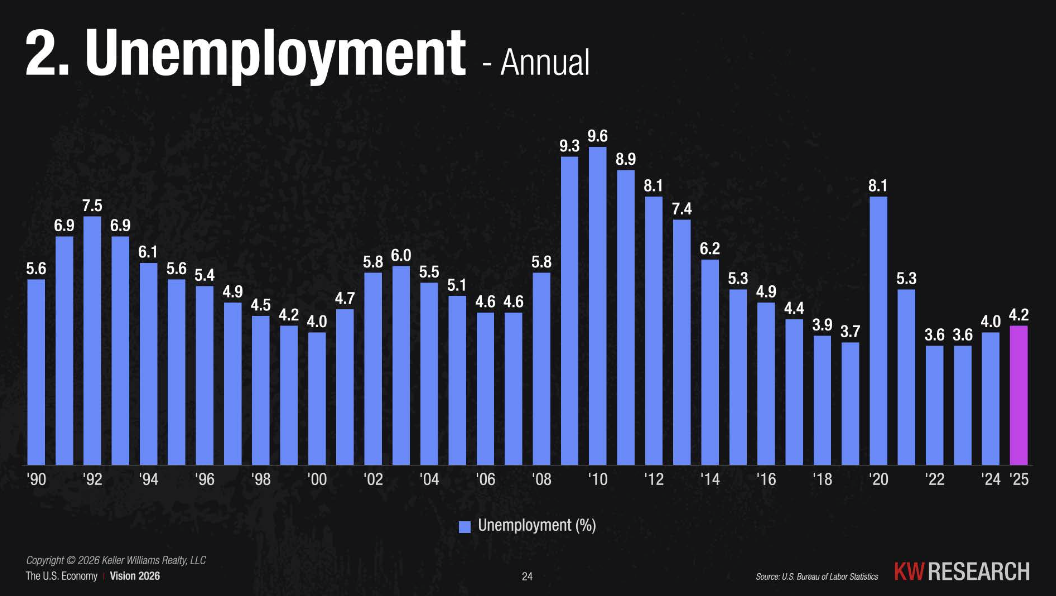
The broader U.S. economy grew at 2.2% in 2025 — solid, if not spectacular. Unemployment sits at 4.2%, which is historically quite low. Job growth continues, though it has slowed to 181,000 new jobs in 2025 — far below the post-pandemic surge but still positive.
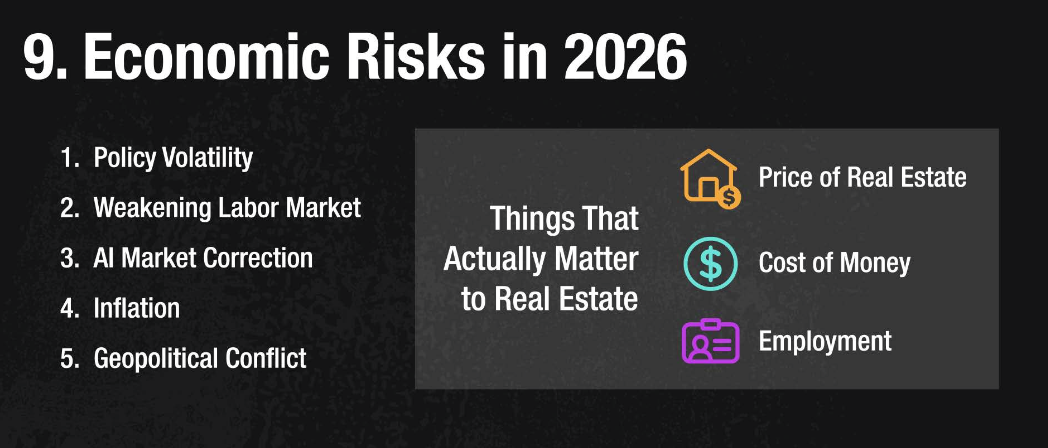
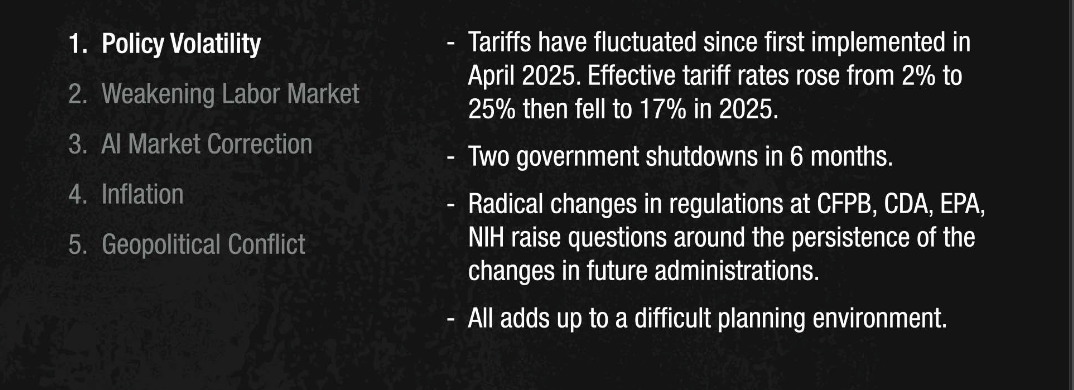
There are real risks worth watching in 2026: policy volatility from ongoing tariff changes, a softening labor market outside of healthcare, questions around AI investment bubbles, and geopolitical tensions. These factors create uncertainty — but they don't point to an imminent crash.
The things that actually drive real estate — home prices, cost of money, and employment — remain in relatively healthy territory.
What this means for you: The economy isn't booming, but it's not falling apart either. Real estate decisions made now, with a long-term mindset, are well-supported by the fundamentals.
What Buyers and Sellers Actually Want From Their Agent — And How Red Sign Delivers
The data is clear about what people want when they hire a real estate agent. And when you look at the list, it reads like a description of exactly what the Red Sign team is built to do.
What Buyers Want:
According to the NAR's 2025 Profile of Home Buyers and Sellers, buyers' top priorities when working with an agent are:
- Help finding the right home (50%) — This is the big one. Half of all buyers say their number one need is simply having someone in their corner who truly listens, knows the market, and helps them cut through the noise to find the right fit. At Red Sign, this is where we shine. We don't just send you Zillow links — we learn what matters to you and work our network to find opportunities before they hit the open market.
- Help negotiating sale terms (13%) and price (12%) — Together, negotiation accounts for 25% of what buyers want most. In a market where every dollar counts, having a skilled negotiator at the table can mean the difference between getting the home you love and watching it go to someone else. Our agents are trained negotiators with a track record of getting clients to the closing table at the right price.
- Help with paperwork and the process (7%) — Real estate transactions involve dozens of documents, deadlines, and decisions. We make sure nothing falls through the cracks — from offer to closing, you'll always know exactly where things stand.
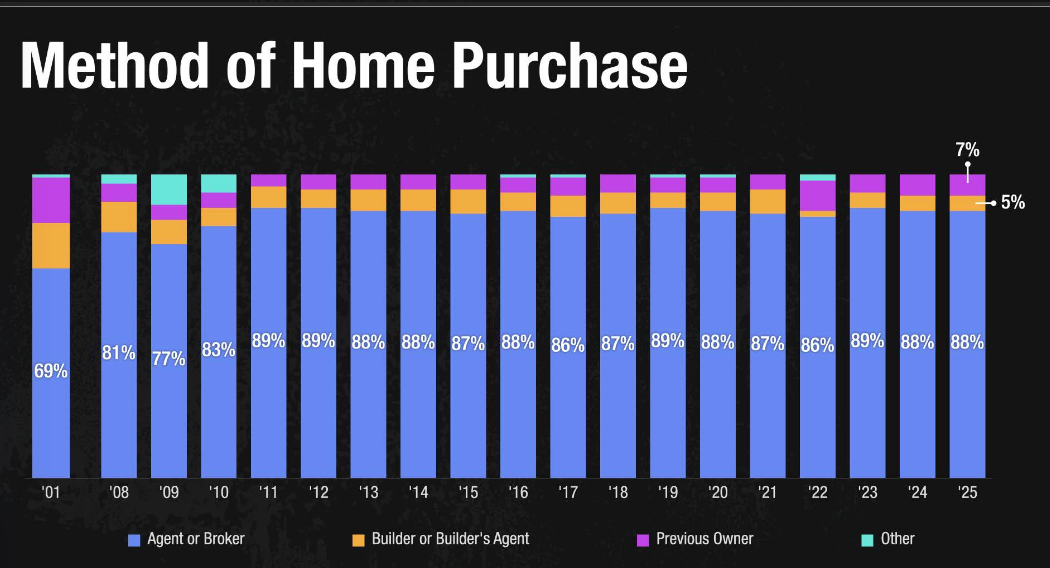
Here's the stat that says it all: 88% of buyers used an agent to purchase their home in 2025 — and buyer satisfaction rates hit 91% when they did. People aren't just using agents out of habit. They're doing it because the right agent genuinely makes the process better, faster, and smarter.
What Sellers Want
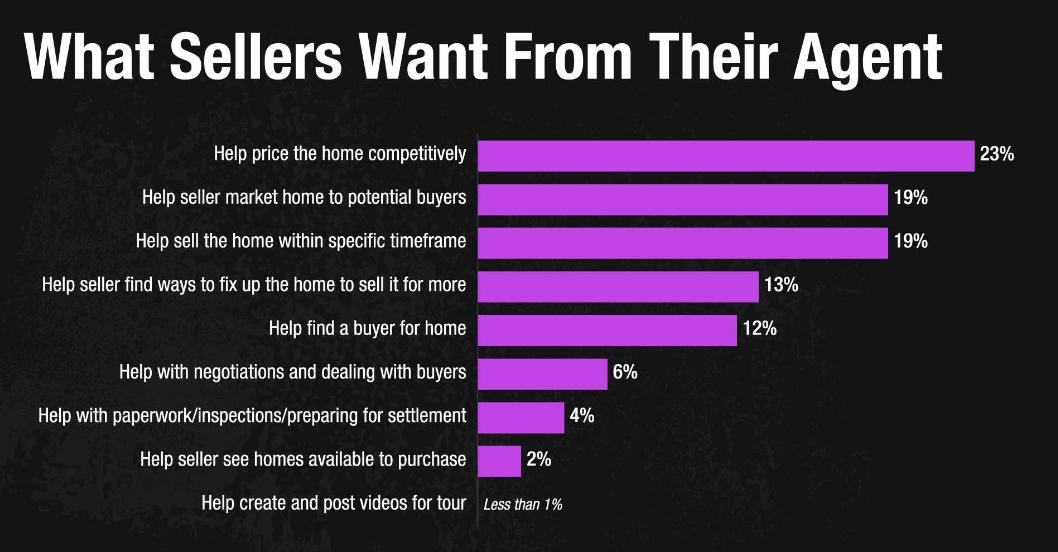
Sellers have equally clear priorities:
- Help pricing the home competitively (23%) — Pricing is everything. Price too high and your home sits. Price too low and you leave money on the table. At Red Sign, we use real-time market data — not guesswork — to position your home to attract serious buyers and maximize your return.
- Help marketing to potential buyers (19%) — Today's buyers start online, and your home needs to stand out from the first scroll. Our marketing goes beyond a yard sign and an MLS listing. We're talking professional photography, targeted digital advertising, social media reach, and a network of buyers we're already working with.
- Sell within a specific timeframe (19%) — Life doesn't wait for the market. Whether you're relocating for work, upsizing for a growing family, or downsizing into the next chapter, we build a strategy around your timeline — not the other way around.
When it comes to choosing their agent, sellers say the most important factors are reputation (35%), honesty and trustworthiness (22%), and local knowledge (11%). Those three things aren't marketing language for Red Sign — they're the foundation everything we do is built on.
The Bottom Line for 2026
The real estate market in 2026 is not the wild frenzy of 2021 or the frozen standstill of 2023. It's a normalizing market — one where:
- Home sales are growing back toward historical averages
- Prices are appreciating steadily at a sustainable 2%
- Inventory is improving, giving buyers more options
- Mortgage rates are declining slowly toward the 5-6% range
- The economy remains stable despite real risks
Whether you're buying your first home, selling and moving up, downsizing, or investing — the right move starts with the right team. That's exactly what Red Sign brings to the table. Ready to talk about what this means for your specific situation? Let's connect.
Data sourced from the Keller Williams Vision Speech 2026, National Association of REALTORS® 2025 Profile of Home Buyers and Sellers, Freddie Mac, the Federal Reserve, and the U.S. Bureau of Economic Analysis.