
Categories
Real Estate Market Trends, Utah Housing MarketPublished April 14, 2026
White House Promises ‘Trump Boom’ of New Housing—What It Means for Utah


For the past several years, the defining challenge in Utah real estate hasn’t been a lack of buyers—it has been a lack of homes. Whether you’ve been actively buying a home in Utah or considering selling a home in Utah, you’ve likely felt the effects of a market where demand consistently outpaces supply, creating upward pressure on prices and limiting options for buyers.
Now, that dynamic may be facing a potential shift.
The White House has introduced a policy direction centered on what is being described as a potential “Trump Boom” in housing, built on the idea of cutting regulatory red tape to accelerate construction and increase housing supply. While the concept is straightforward at a national level, its real-world impact will ultimately depend on how it translates into local markets like Utah—where growth patterns, land constraints, and demand drivers create a uniquely competitive environment.
Understanding what this proposal could realistically mean requires looking beyond the headline and examining how policy, supply, and local market behavior intersect.
Why This Topic Matters in Utah Right Now
Utah’s housing challenges are not cyclical in the traditional sense; they are structural. Even during periods of slower activity, the market rarely experiences a true surplus of homes. Instead, it operates within a narrow band where inventory remains limited relative to demand, which is why affordability has become such a persistent concern.
This is precisely what makes the current policy conversation so relevant.
Efforts to reduce regulatory barriers are aimed at one of the most consistent constraints in housing development: the time, cost, and complexity associated with building new homes. In a state like Utah, where population growth and economic expansion continue to drive demand, even modest improvements in construction timelines could have meaningful implications over time.
The Role of Regulation in Slowing Supply
It’s important to recognize that Utah’s housing shortage is not simply the result of insufficient interest from builders. In many cases, developers are actively seeking opportunities but face delays tied to zoning approvals, permitting processes, infrastructure coordination, and local planning requirements. These factors can extend project timelines significantly, reducing the pace at which new inventory enters the market.
When policymakers discuss “cutting red tape,” they are essentially trying to reduce what is often described as a bureaucratic tax on housing development—the accumulated cost of delays, approvals, and regulatory steps that slow down how quickly homes can be built and delivered to the market.
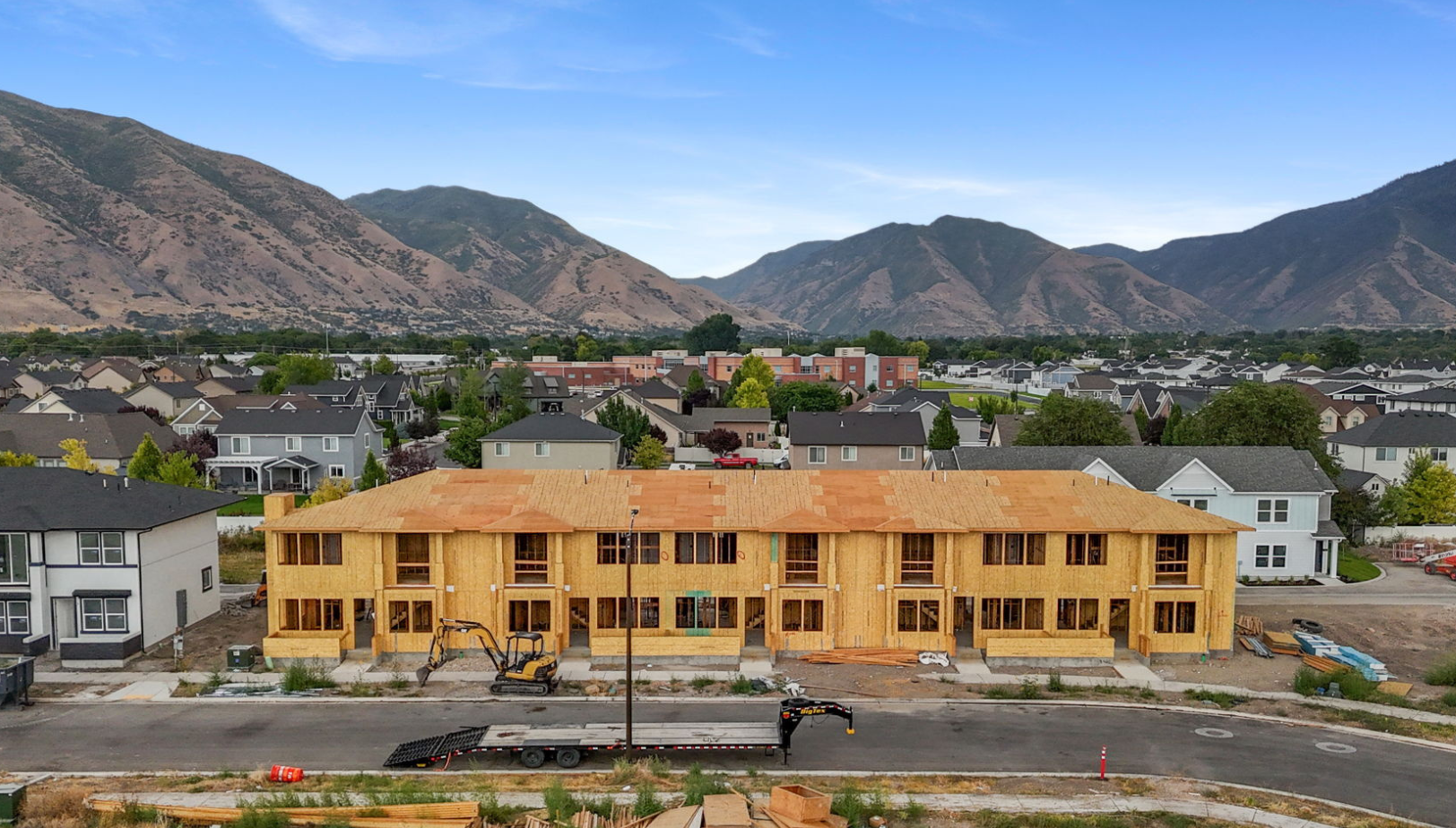
Understanding the ‘Trump Boom’ Housing Strategy
At its core, the “Trump Boom” housing strategy is built on the idea that a significant portion of housing cost and delay is not driven by materials or labor alone, but by what can be described as a bureaucratic tax on development—the accumulation of regulatory steps, approval timelines, and administrative requirements that add time and cost before construction even begins.
By reducing this friction, the policy aims to shorten development cycles, improve project feasibility for builders, and ultimately increase the flow of housing supply into markets like Utah.
Speed of Delivery vs. Total Supply
One of the most important distinctions in this conversation is the difference between increasing the speed of construction and increasing the total volume of housing. While both are valuable, the immediate impact is more likely to be seen in how quickly homes are completed rather than in a sudden surge of new inventory.
In Utah, where demand tends to absorb new supply efficiently, faster delivery may help reduce some of the pressure created by delayed projects, but it is unlikely to create an oversupply scenario in the near term.
Why Prices May Not Fall as Expected
A common assumption is that more construction will automatically lead to lower home prices. In practice, the relationship is more nuanced. Land costs in many parts of Utah remain elevated, labor availability continues to be a limiting factor, and demand remains consistently strong due to population growth and economic stability.
As a result, increased supply is more likely to stabilize price growth rather than reverse it entirely, particularly in high-demand areas along the Wasatch Front.
Why This Is Happening in the Utah Market
To fully understand how this policy direction could influence Utah real estate, it’s essential to look at the underlying forces shaping the market.
Utah continues to experience steady population growth, supported by a strong job market and a high quality of life that attracts both in-state and out-of-state buyers. At the same time, household formation remains robust, particularly among younger demographics who are gradually entering the housing market despite affordability challenges.
These demand drivers are paired with a supply side that has struggled to keep pace, not necessarily due to lack of activity, but due to the constraints discussed earlier.
Even in periods where listings increase, the market rarely tips into excess inventory. Instead, it moves toward temporary balance before tightening again. This pattern suggests that any policy aimed at increasing supply will likely act as a stabilizing force rather than a disruptive one.
The “Bureaucratic Tax” on Utah Housing Development
One of the most overlooked forces shaping Utah’s housing market is what economists often describe as a “bureaucratic tax.” This isn’t a literal tax, but rather the hidden cost created by layers of regulation, permitting delays, zoning restrictions, and administrative steps required before a single home can be built.
In Utah, this shows up in extended approval timelines, shifting local requirements, and added compliance costs that accumulate long before construction even begins. These delays don’t just slow down development—they increase final home prices because financing, labor, and materials all become more expensive the longer a project is held in the pipeline.
When policymakers talk about cutting “red tape,” what they are really targeting is this bureaucratic tax. The goal is to reduce friction in the system so homes can move from planning to completion more efficiently.
In a fast-growing state like Utah, even small improvements in this process can meaningfully affect how quickly supply reaches the market.
How to Approach This Strategically
The key here isn’t trying to predict exactly what will happen. It’s about building a strategy that works across multiple scenarios.
For buyers, that means focusing on affordability, long-term value, and flexibility. If you find the right home at the right price, waiting for a hypothetical future shift may not be worth the risk.
For sellers, it means understanding your local micro-market. Not all areas in Utah respond the same way to inventory changes. Some neighborhoods may remain highly competitive, while others become more balanced.
Timing also plays a role—but not in the way most people think.
It’s less about trying to “time the market” perfectly and more about recognizing when your personal situation aligns with market conditions.
And perhaps most importantly, it’s about staying informed.
Policy changes like this don’t create overnight transformations. They create trends—and those trends take time to unfold.
The Bigger Picture for Utah Real Estate
So is this the beginning of a major shift?
Possibly—but it’s more likely the continuation of an ongoing evolution.
Utah has been dealing with housing supply challenges for years. A push toward deregulation could accelerate solutions, but it won’t solve everything overnight.
What it could do is:
- Increase construction activity over time
- Improve inventory levels gradually
- Create a more balanced market environment
That’s not a crash scenario. It’s a normalization scenario.
And for many people, that’s actually a positive outcome.
A balanced market tends to be healthier, more predictable, and more sustainable in the long run.
Final Thoughts
The idea of a “Trump Boom” in housing reflects a broader recognition that increasing supply is essential to addressing affordability challenges. In Utah, where demand has consistently outpaced inventory, efforts to streamline construction could play a meaningful role in shaping future market conditions.
However, the impact will not be immediate, nor will it be uniform across all areas.
Buyers may experience greater flexibility and choice over time, while sellers may need to adapt to a more competitive landscape. In both cases, success will depend on understanding how these broader trends translate into local market behavior.

Red Sign Team
Real Estate Team | Red Sign Team | KW Westfield
or another way