
Categories
Market Insights, Utah Real Estate, Utah Real Estate MarketPublished June 10, 2026
The Art of Speed-to-Lead in Utah Real Estate

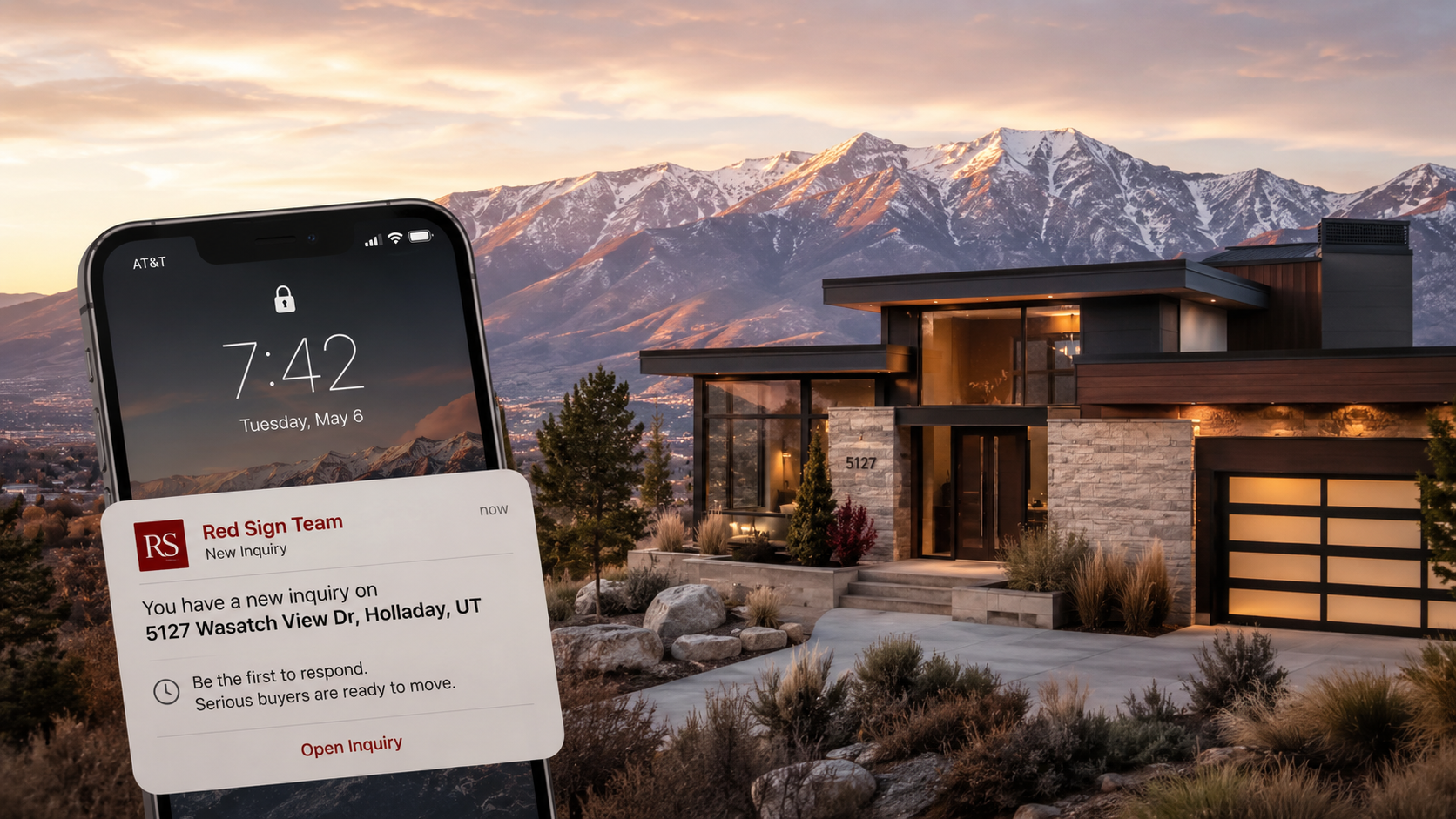
A Utah home can take 52 days to sell, but a serious online inquiry can go cold in five minutes. That’s the strange tension shaping real estate conversations across the state right now. The market is not moving with the same frenzy people remember from 2020 and 2021, yet attention is moving faster than ever. Someone can look at a home in Lehi, compare Salt Lake County prices, check mortgage rates, notice an HOA fee, and message three different real estate websites before dinner is over.
That is why “speed-to-lead” has become one of the most misunderstood advantages in Utah real estate. It sounds like a race to reply first. It is not. The better way to think about it is this: the first useful response often becomes the response people trust. Fast matters, but only when the answer is clear, local, and relevant to the decision in front of them.
Recent lead-response research has consistently shown that early follow-up dramatically improves the odds of connection, with the widely cited five-minute window still treated as the benchmark for high-intent inquiries. But in Utah, the real story is not just the timer. It is what happens inside that first response.
The biggest mistake is thinking a slower market means slower decisions
Utah’s housing market has cooled from its pandemic peak, but “cooler” does not mean inactive. Statewide home prices were still up year over year in May 2026, while homes were spending more time on the market than during the fastest years. Redfin reported Utah’s median sale price at $528,124 in May 2026, up 1.6% year over year, with a median of 52 days on market.
That combination matters. More days on market can create the impression that urgency has disappeared. But the better reading is that Utah’s mtarket has become more selective. Homes that are priced right, located well, presented clearly, or positioned in high-demand corridors can still draw fast attention. Homes that miss the mark sit longer, face tougher questions, or need concessions.
Longer days on market do not mean people are moving slowly
Salt Lake County shows the split clearly. Over the three months ending May 2026, the median sale price was about $568,295, barely up year over year, while homes averaged 34 days on market. Utah County, meanwhile, had a median days-on-market reading of 50 in May 2026, according to FRED data sourced from Realtor.com.
That is not a dead market. It is a more disciplined one.
The mistake many people make is assuming a longer listing timeline gives everyone permission to move slowly. In reality, the first conversation still sets the tone. When someone asks about a home near Daybreak, a townhome in Saratoga Springs, a foothill property in Draper, or a new-build option in Eagle Mountain, they are rarely asking only, “Is this available?” They are asking, “Is this worth my time?”
Speed-to-lead is the art of answering that bigger question before the moment passes.
What speed-to-lead actually means now
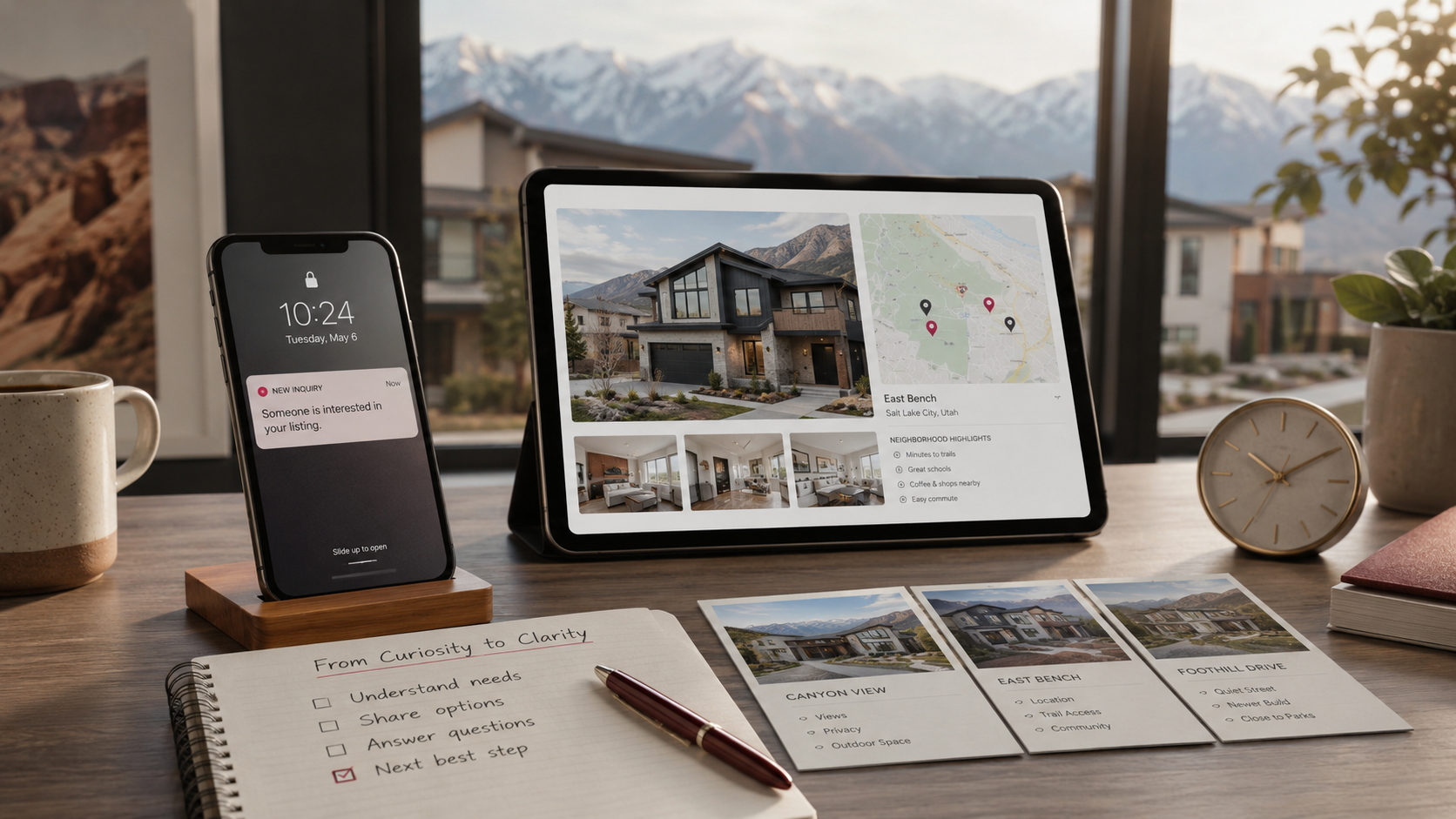
Speed-to-lead is usually defined as the time between a new inquiry and the first response. That definition is technically correct, but too thin. In real estate, especially in Utah, the better definition is the time it takes to move someone from curiosity to clarity.
That distinction matters because people are no longer starting from zero. Most have already looked online. National data from the 2025 NAR Home Buyers and Sellers Generational Trends Report found that 43% of homebuyers began the process by looking online for properties, and buyers typically searched for 10 weeks while viewing a median of seven homes.
By the time someone fills out a form, clicks “request a tour,” or sends a message about a listing, they may already have compared photos, school boundaries, commute times, monthly payments, and nearby sold homes. A slow response feels like a dead end. A generic response feels like a robot. A fast, useful response feels like someone opened the right door.
The five-minute rule still matters
The classic lead-response research is old enough that some people dismiss it, but the core finding still shows up in newer sales-response studies: the first few minutes are disproportionately important. The InsideSales/MIT Lead Response Management study found that the odds of contacting a lead drop sharply when the response moves from five minutes to 30 minutes, and the odds of qualifying that lead drop as well.
More recent lead-response analysis has also reinforced the same pattern: conversion rates are much higher when contact happens inside the first five minutes.
That does not mean every person needs a phone call within seconds. It means the window of attention is short. People keep tabs open. They submit multiple inquiries. They move between Zillow, Realtor.com, Redfin, Google Maps, lender calculators, and social media. In that environment, silence is not neutral. Silence answers the question badly.
But speed without substance can backfire
A fast reply that says, “Are you looking to buy soon?” is not a strategy. It is just motion.
The better response sounds more like this: “Yes, that home is still showing as available. The key thing to know is that homes in that part of Salt Lake County are moving faster than the statewide average, and the monthly cost may depend heavily on rate, HOA, and property taxes. I can help you compare it with two similar options before you schedule time.”
That kind of answer does three things at once. It confirms the inquiry. It adds local context. It gives a practical next step.
That is the art.
Utah makes speed-to-lead more complicated than national advice admits
Most national real estate advice treats every online lead the same. Utah does not work that way.
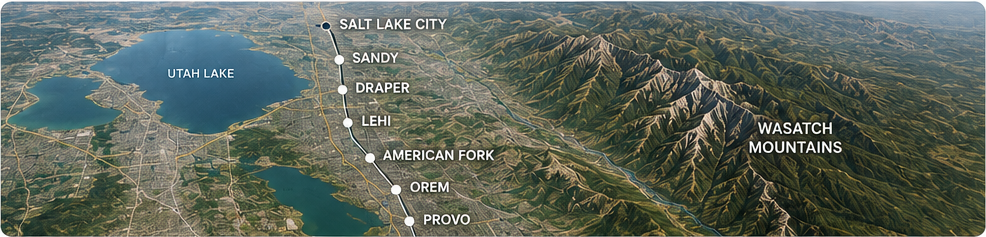
The Wasatch Front is not one market. It is a chain of related but very different local decisions. Salt Lake City, Millcreek, Sandy, Draper, Lehi, American Fork, Provo, Herriman, Tooele, and Ogden can all be affected by the same mortgage-rate environment, but they do not move in the same rhythm.
One state, many different real estate conversations
A home near a TRAX station is not competing in the same way as a newer home near Mountain View Corridor. A townhome in Vineyard may raise different questions than a single-family home in Holladay. A property in Eagle Mountain might look more affordable on price, but the commute, builder inventory, HOA structure, and future resale pool all matter.
This is where speed-to-lead becomes less about sales and more about pattern recognition. Red Sign Team has worked through several market cycles across the Wasatch Front, and that local repetition matters. A national market headline can tell someone prices are flattening. It cannot tell them why two similar homes ten miles apart may draw completely different levels of interest.
Salt Lake County is moving differently from Utah County
Salt Lake County remains one of Utah’s most watched markets because it contains both mature neighborhoods and job-centered demand. In May 2026, Redfin showed Salt Lake County homes selling after an average of 34 days, compared with the statewide median of 52 days.
Utah County has a different story. Growth corridors like Lehi, Saratoga Springs, Eagle Mountain, and Spanish Fork continue to absorb households looking for newer homes, more space, or relative affordability compared with parts of Salt Lake County. But that does not make every property equally urgent. In fast-growing areas, new construction can create more choices, and more choices can make people more analytical.
That is exactly why response quality matters. A quick answer in Salt Lake County might need to focus on competition, pricing, and timing. A quick answer in Utah County might need to clarify builder incentives, commute patterns, future inventory, or whether a resale home is priced correctly against new construction.
Same state. Different conversation.
The Wasatch Front is a corridor, not a single location
People do not experience Utah real estate only by city boundaries. They experience it through daily movement.
Someone might work in Draper, have family in Orem, attend church in Lehi, ski in Cottonwood Canyon, and compare homes from Riverton to Pleasant Grove. That kind of movement makes the first real estate conversation more layered. The question is not always “Which home is best?” It may be “Which tradeoff is least likely to frustrate me six months from now?”
This is one of the most underreported parts of speed-to-lead in Utah. The fastest response is not always the most useful one. The most useful response understands the map.
A good local reply can frame the choice quickly: commute versus square footage, school boundary versus price, older neighborhood versus newer construction, HOA convenience versus monthly cost, canyon access versus traffic, walkability versus yard size. That is where trust begins.
Quick market context: why timing still matters in Utah
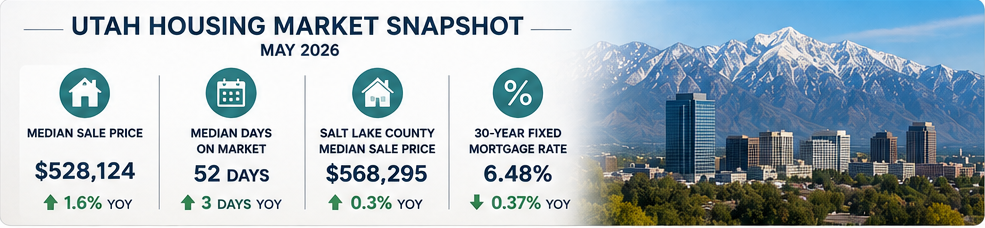
Here are the numbers behind the current speed-to-lead conversation:
-
Utah median sale price: $528,124 in May 2026, up 1.6% year over year.
-
Utah median days on market: 52 days in May 2026, up 3 days year over year.
-
Salt Lake County median sale price: $568,295 over the three months ending May 2026, up 0.3% year over year.
-
30-year fixed mortgage rate: 6.48% as of June 4, 2026, down from 6.85% a year earlier.
The takeaway is not that Utah is suddenly easy to navigate. It is that the margin for vague advice has narrowed. Higher rates, higher prices, more inventory, and local variation all make the first conversation more important.
The common belief: speed-to-lead means pushing people
This is where the industry often gets it wrong.
Common belief: Speed-to-lead means calling immediately, applying pressure, and trying to lock someone into a showing.
Reality: Speed-to-lead works best when it removes pressure by giving people useful information quickly.
Nobody wants to feel chased. But most people do appreciate a clear answer when they are actively trying to understand a decision. The difference is tone.
A rushed reply creates pressure. A useful reply creates clarity.
A rushed response says, “When can you see it?”
A useful response says, “Here’s what matters about this home, here’s what I’d compare it against, and here’s what I would check before spending your time.”
That is especially important after the 2024 industry changes around written buyer agreements. Many people now have more questions about representation, compensation, and what needs to be signed before touring a home. NAR states that, as of August 17, 2024, many real estate professionals must use a written buyer agreement before touring a home with a buyer, either in person or virtually.
That change makes the first response more important, not less. People need clarity before commitment. A fast reply that explains the process plainly can reduce confusion. A fast reply that avoids the topic can create mistrust.

What a strong first response should include
The best speed-to-lead systems are not built around one perfect script. They are built around useful judgment. The response should match the question, the property, and the person’s likely next concern.
A strong first response usually includes:
-
A direct answer to the inquiry. Is the home available? Are showings possible? Is there an offer deadline? Has the price changed?
-
One piece of local context. Is this area moving faster or slower than nearby alternatives? Is the price reasonable compared with recent activity?
-
One cost or condition reminder. Mortgage rate, HOA dues, property taxes, insurance, commute, inspection, or due diligence may change how the home feels financially.
-
One practical next step. Compare similar homes, review disclosures, check monthly payment range, or schedule a showing after confirming the right details.
That is enough. The first response does not need to answer every possible question. It needs to prove that the person on the other end is paying attention.
The Utah due diligence piece should not be an afterthought
In Utah, this can be especially valuable because due diligence is not a small detail. The Utah Real Estate Purchase Contract gives buyers a due diligence period to review seller disclosures and conduct inspections, evaluations, and other checks. It also identifies items such as HOA dues, utilities, property condition, environmental issues, water, and other material matters as part of that review.
A fast response that ignores those issues is shallow. A fast response that flags them early is service.

What people are really asking when they search this topic
Search behavior around speed-to-lead usually looks simple on the surface: “What is speed-to-lead?” “Why does response time matter?” “What is the five-minute rule in real estate?” But underneath those questions is a more practical concern: people want to know whether responsiveness is a sign of competence.
In real estate, it often is.
Not always. A fast response alone does not prove expertise. But a slow response can reveal a broken system. Real estate decisions involve deadlines, documents, inspections, negotiations, financing updates, appraisal issues, title questions, and closing details. If the first inquiry sits untouched for hours, it is reasonable to wonder what else might sit untouched later.
That is why speed-to-lead has become a trust signal. It is not just marketing performance. It is a preview of how organized the relationship may feel once the stakes are higher.
- Is the first person to respond always the best choice?
No. The first response wins attention, not trust. Trust comes from the quality of the answer.
The strongest position is fast and informed. A quick but empty message may start the conversation, but it will not carry it. A slower but thoughtful message may still recover the opportunity, but it starts at a disadvantage. The best local professionals avoid that tradeoff by building systems that allow both speed and substance.
- Does speed matter when inventory is rising?
Yes, but the reason changes.
In a low-inventory frenzy, speed helps people compete. In a more balanced market, speed helps people interpret. Utah’s current market has more room for comparison than the pandemic years, but that does not make decisions simple. More options can actually create more hesitation.
A fast, clear response helps sort the options before the search becomes exhausting.
- Is automation enough?
Not by itself.
Automation can acknowledge an inquiry. It can send a link, confirm receipt, or route the message to the right person. But real estate still needs human judgment. A person looking at a condo near downtown Salt Lake City may need to understand HOA costs and rental restrictions. A person looking in Lehi may need a new-construction comparison. A person watching Park City-adjacent or Wasatch County options may need a very different conversation about second-home demand, seasonality, and pricing behavior.
The system can be fast. The guidance still needs to be human.
The underreported advantage: speed creates better local data
Here is the part most real estate blogs miss: speed-to-lead is not only about converting more inquiries. It also helps local teams understand the market faster.
Every inquiry is a small signal. When people consistently ask about payment shock, HOA dues, inspection concerns, commute tradeoffs, builder incentives, or whether a price is negotiable, those questions reveal where the market’s attention is moving. A team that responds quickly also learns quickly.

Fast conversations reveal hesitation before the data does
That feedback loop matters in Utah because the market can shift unevenly. Interest in Salt Lake’s east side may not tell the same story as interest in Herriman. Demand in Lehi may not explain what is happening in Provo. A sudden rise in questions about concessions, rate buydowns, or price cuts may show hesitation before closed-sales data catches up.
Red Sign Team’s local advantage is not just access to listings. It is the ability to read these conversations in real time and connect them to what is happening across Utah neighborhoods, corridors, and price points.
That is a quieter advantage than a flashy marketing campaign. It is also more useful.
What speed-to-lead should feel like in 2026
The future of speed-to-lead in Utah real estate will not be won by the loudest follow-up. It will be won by the clearest first answer.
That matters because the state’s real estate story is becoming more layered. Population growth is still part of the long-term picture, but affordability is tight. More townhomes and condos are entering the conversation, but HOA costs can change the math. Mortgage rates are lower than a year ago but still high enough to make monthly payments sensitive. Some homes sit. Others move. Some neighborhoods feel calm until the right property appears.
The best first answer organizes the moment
The first response has to do more than say hello.
It has to help someone understand whether a home deserves attention, whether the price makes sense, whether the timing is realistic, and what hidden detail might change the decision. That is not pressure. That is clarity.
Speed-to-lead, done well, respects the fact that people are already carrying a lot of information. It does not add noise. It organizes the moment.
For anyone watching Utah real estate closely, that may be the defining advantage now. Not speed for its own sake. Not automation pretending to be expertise. Just the right local answer before the window closes.
For Utah homeowners and those looking to become one, the smartest next step is to work with a local team that treats responsiveness as part of the service, not a sales tactic. Red Sign Team is built for that kind of market: fast enough to keep up, local enough to know what the first answer should actually say.
Red Sign Team
Real Estate Team | Red Sign Team | KW Westfield
or another way